The hidden journey of water from the source to the glass
We open the tap. We fill a glass. We drink.
The whole process takes a few seconds, and we rarely think about what happened before that.
But the water that reaches a home, office, hotel or production building has often travelled a long way. It has been taken from a natural source, treated, purified, stored, pumped and transported through kilometres of infrastructure.
And along that path, some of it never reaches the end user.
That turns a seemingly simple question — “Where does our water come from?” — into a more interesting one:
How much of the water we abstract do we actually get to use?
Water does not start its journey at the tap
Modern cities rely mainly on centralised water-supply systems.
Water is abstracted from surface or groundwater sources, goes through the necessary treatment and then enters the distribution network.
From there it travels to millions of different points of use.
- Homes
- Offices
- Hotels
- Hospitals
- Schools
- Industrial sites
In theory the system looks simple.
In practice, between the source and the glass there is a huge infrastructure — pipelines, reservoirs, pumping stations, metering systems and facilities that have to be maintained all the time.
And it is in that infrastructure that one of the major problems of modern water supply arises.
In Europe almost a third of public water supply is lost
According to the European Environment Agency, about 33% of the water abstracted for public water supply in the EU is lost before it reaches actual users. In countries such as Bulgaria, Croatia and Italy, losses exceed 40%.
The reasons can vary:
- leaks;
- breakdowns;
- ageing infrastructure;
- inaccurate metering;
- unauthorised use;
- technical losses in transmission.
That is why the sector often uses the term non-revenue water — water that has entered the supply system but is not finally recorded as billed consumption.
Not everything in this category is water that has literally leaked into the ground. Some of it may be linked to metering inaccuracies or authorised but unbilled use.
A substantial share, however, is a real physical loss of the resource during transport.
And what does the situation look like in Bulgaria?
Data from the National Statistical Institute for 2024 give a particularly clear sense of the scale of the problem.
During the year, about 876.6 million cubic metres of water entered the country’s water-supply systems.
Of that, total consumption — billed and unbilled — was approximately 382.1 million cubic metres.
Reported total losses amounted to about 494.4 million cubic metres, of which nearly 425 million cubic metres were losses during water transport.
That means reported total losses represent about 56% of the water that entered the system.
Physical transport losses alone are close to half of the water that entered the system.
By comparison, in the same year about 260.3 million cubic metres of water were delivered to Bulgarian households.
The scale becomes even clearer when we compare those two numbers.
The amount of water lost during transport alone is substantially greater than all the water delivered to households in Bulgaria during the year.
Lost water is not only lost water
This is the essential part of the problem.
Once water has been abstracted, treated and pumped into the system, other resources have already been used for it.
- Energy
- Infrastructure
- Equipment
- Chemical and technical processes
- Labour
- Maintenance
If that water is lost before it reaches the user, we do not lose only the water itself.
We also lose part of the resources used to abstract, treat and transport it.
That is why reducing leaks is already an important part of European policy for more sustainable water management. The new European drinking-water framework includes requirements to assess leakage levels and measures to reduce them.
And when the water comes in a bottle?
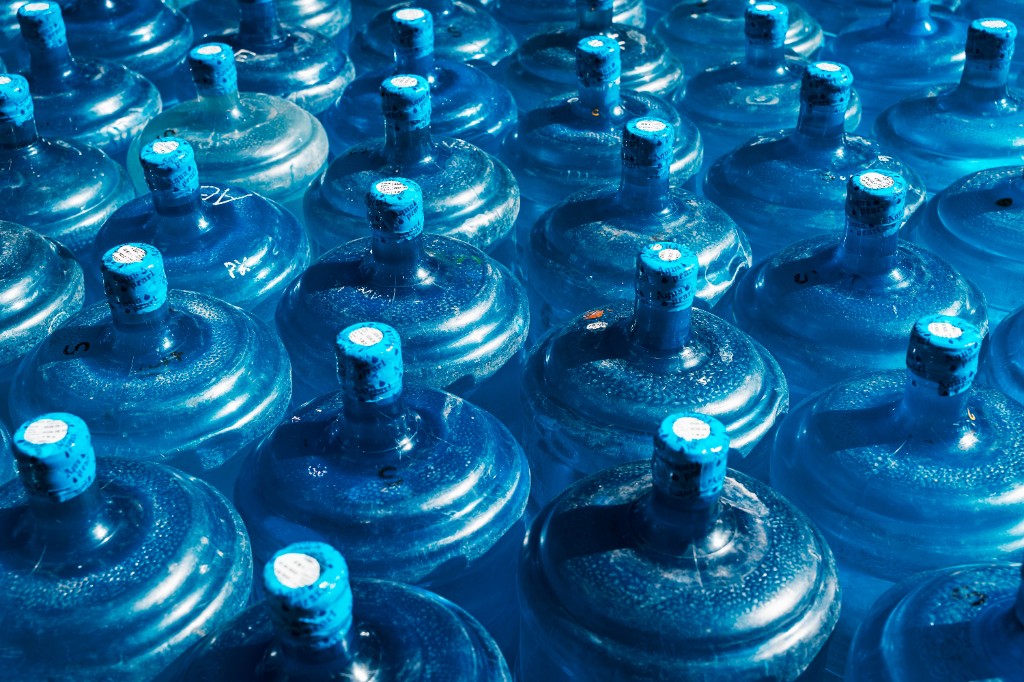
With bottled water the path looks different, but it also has its own infrastructure.
- The water has to be abstracted.
- Treated according to the relevant process.
- Bottled.
- Packaged.
- Palletised.
- Transported.
- Stored.
- Delivered to a shop, restaurant, hotel or office.
It often then has to be cooled and moved again to the point where it will actually be consumed.
After use, another part of the chain remains — the packaging.
A plastic or glass bottle, a cap, a label, transport packaging and the logistics of waste management.
That is why the price of water cannot always be measured only by the price of one litre.
Behind it stands a whole system.
Water is one of the few resources we transport daily in huge quantities
Here an interesting paradox appears.
Water exists naturally around us in different forms.
But to use it, the traditional model largely relies on abstracting it in one place and moving it to another.
That model is the foundation of modern civilisation and it will not disappear.
Technological development, however, raises another question:
Does every litre we use necessarily have to be transported from far away?
From centralised to local production
We are already seeing a similar shift in other areas.
For decades electricity was produced almost entirely in large centralised plants and then delivered to users.
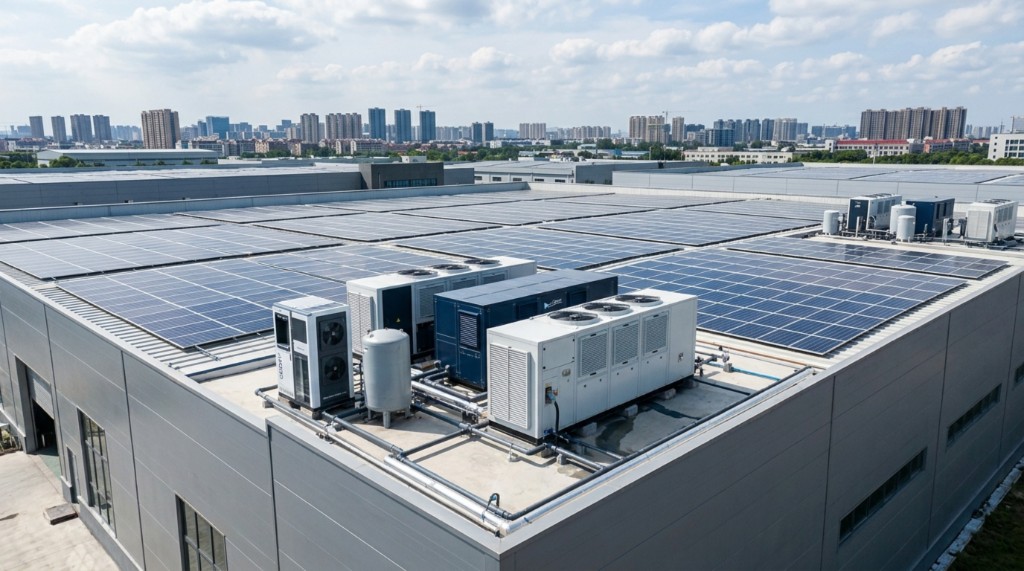
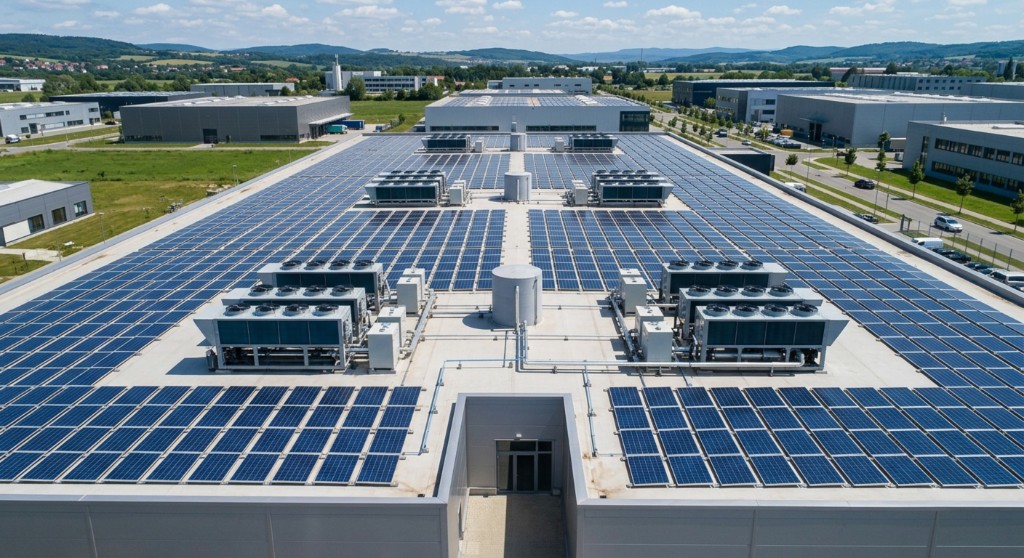
Today a building can have solar panels, energy storage and systems to manage its own consumption.
It remains connected to the electricity grid, but it can also produce part of the resource locally.
A similar idea is beginning to develop for water.
- Rainwater harvesting
- Reuse of certain water streams
- On-site treatment
- Desalination in suitable regions
- And producing water from atmospheric moisture
What if some of the water did not have to travel at all?
The air around us contains water vapour.
The amount varies with temperature, relative humidity and climate, but moisture is present in the atmosphere almost everywhere.
Atmospheric Water Generation, or AWG, uses exactly that resource.
The system draws in air and, through controlled cooling, creates conditions in which some of the water vapour it contains condenses.
The resulting water then goes through successive treatment and filtration stages, depending on the specific system.
The result is a fundamentally different model: instead of transporting finished water to the place of use, it is generated where it is needed.
You can read more about the process in How an atmospheric water generator works.
What does this change?
Generating water locally does not necessarily mean replacing traditional water-supply infrastructure.
And it does not have to be seen that way.
What is more interesting is the chance to diversify water sources.
An office can use the mains network and at the same time generate drinking water on site.
A hotel can reduce its dependence on bottled-water deliveries.
A remote site can gain an extra source where conventional infrastructure is limited.
A business can include local water production as part of a wider water-sustainability strategy.
This does not remove water infrastructure.
It adds another option to it.
From the air to the glass
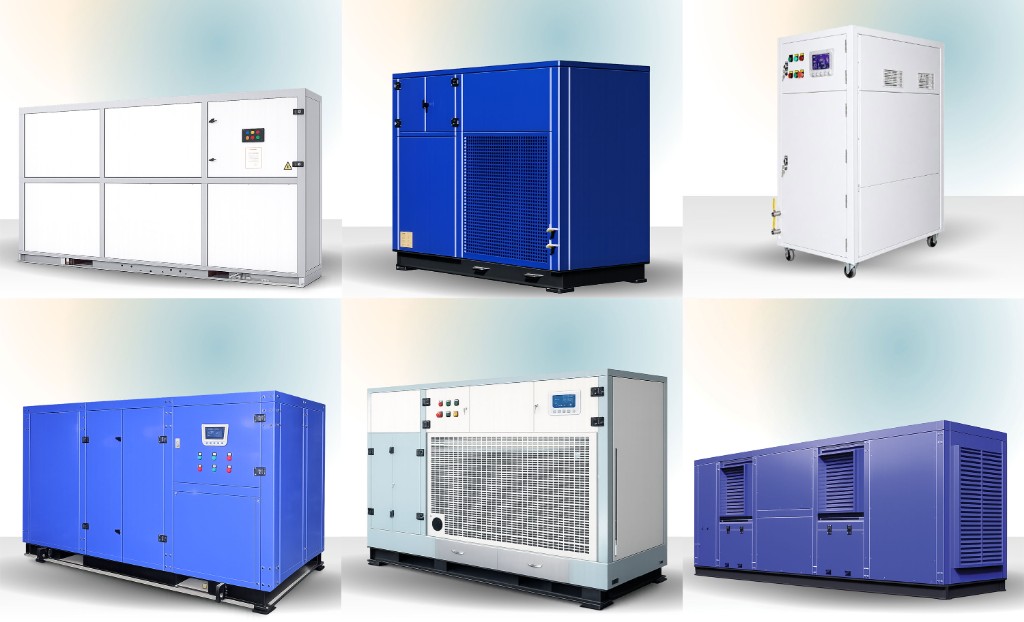
This is the principle behind Cup of Air systems.
They use moisture in atmospheric air as a local water resource and make it possible to generate water close to the point where it will be used.
Without every bottle having to be produced, transported and stored in advance.
Without finished water having to travel tens or hundreds of kilometres before it reaches the person who will drink it.
This changes not only the way we obtain water.
It changes the way we think about its source.
The future of water is unlikely to be a single source
The water systems of the future are unlikely to rely on one universal solution.
Traditional sources will remain critically important.
But alongside them there will increasingly be new technologies — smarter network management, leak reduction, water reuse, rainwater harvesting, desalination and producing water from atmospheric moisture.
The reason is simple.
Water is too valuable a resource for us to think only about how to abstract more of it.
The more important question is becoming:
How do we lose less, transport more wisely, and produce part of what we need where we actually use it?
Perhaps the next major change in the water sector will not be the discovery of a new source.
Perhaps it will be the realisation that one of them has always been around us.
In the air.
Want advice on the right model?
Request a quote