For a long time we took running water for granted: you turn the tap and it’s simply there.
That is, until you start building your dream house outside the city, developing a small hotel in the countryside, or running a production site far from the grid, and you come face to face with the reality of life without a water mains.
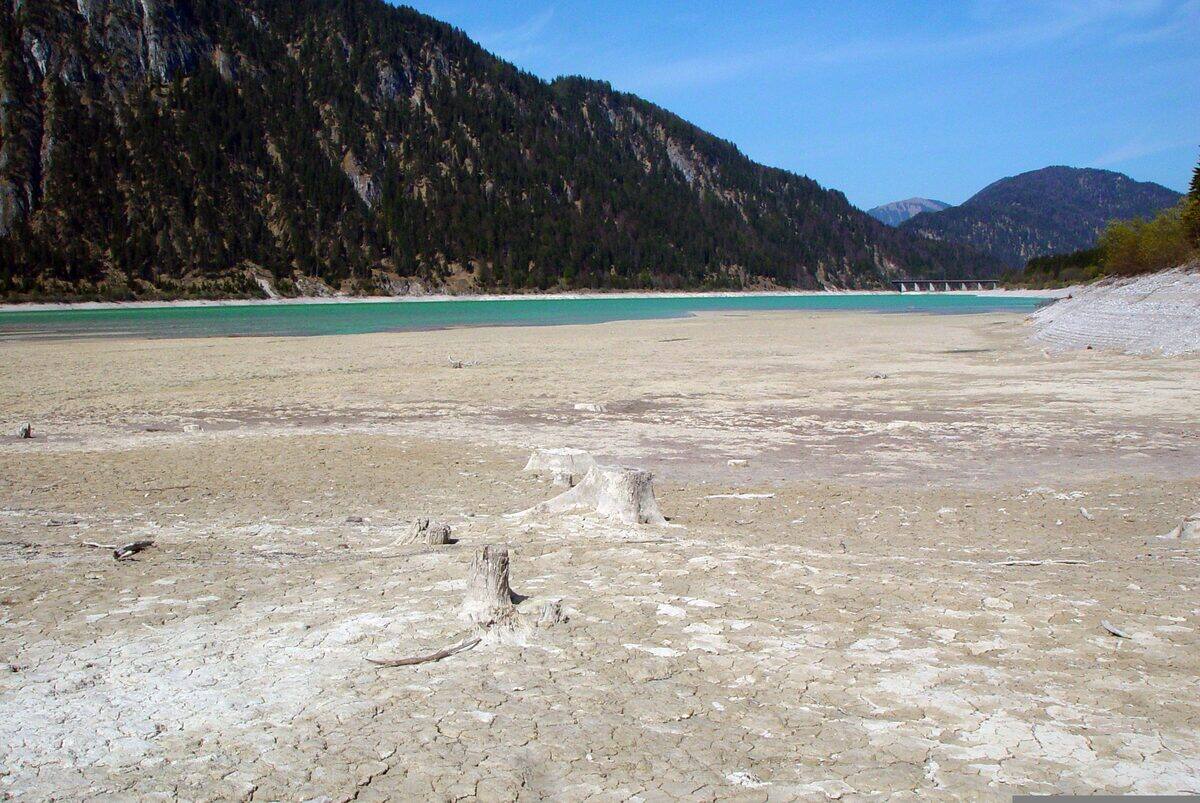
Today this is long past being a concern only for lonely mountain huts. In Bulgaria, over 60% of water is lost in the aging pipes, with losses exceeding 83% in Shumen and Pernik, and in July 2025 nearly 142,000 people in 8 towns and 121 villages began the summer with water problems.
In Europe, water stress affects 20% of the territory and 30% of the population every year. When laying a new water pipeline is also slow and expensive, the drive toward independent water supply turns from a bold dream into a necessity of life.
When the central pipe is not the answer, every owner has five real alternative sources of drinking water — and each hides both freedom and its own hidden traps.
1. Your own borehole
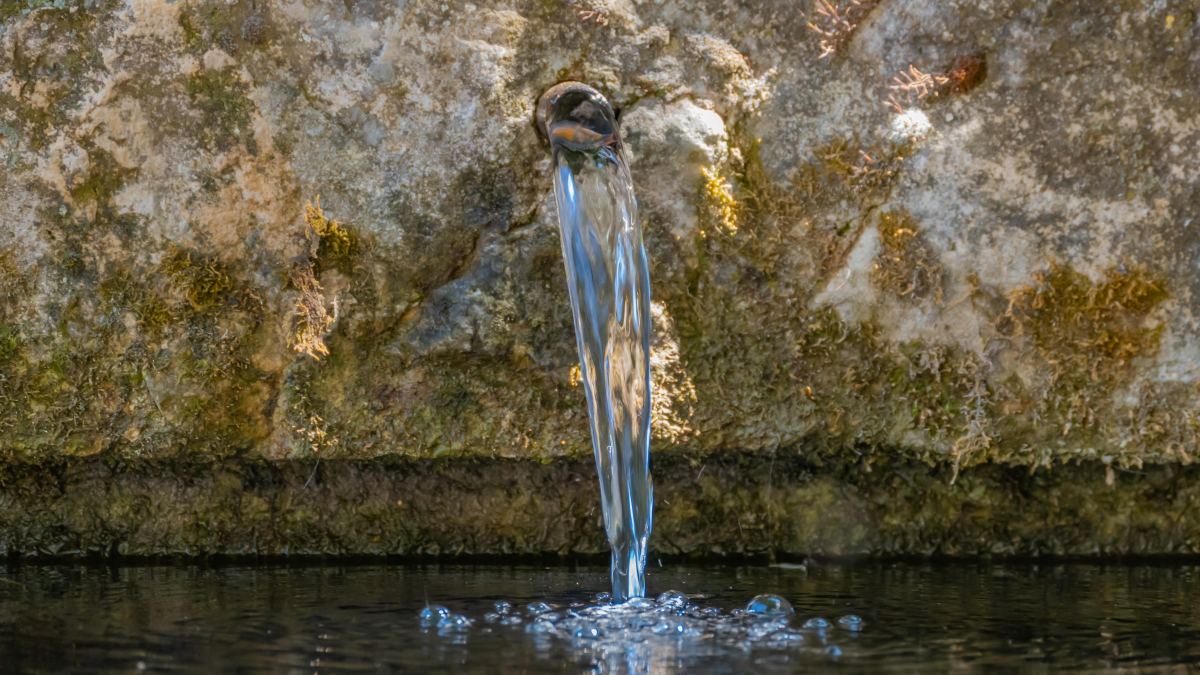
The first and best-known alternative is your own borehole.
The idea of having your own underground spring in the yard brings an enormous sense of security, and for households in populated areas the law allows free use of up to 10 cubic meters per day after registration with the Basin Directorate.
However, once the property is outside the regulated zone or the water is for business, the romance quickly gives way to hydrogeological reports, permits, and months of waiting.
The drilling itself is even more nerve-racking: nature doesn’t promise that you won’t hit dry ground, that the level won’t drop during yet another hot summer (as is already happening at over 70% of monitoring stations in our country in dry years), or that the water will be drinkable straight away.
2. Rainwater harvesting
Collecting rainwater carries a similar mix of hope and risk.
A 100-square-meter roof can capture nearly 49 cubic meters a year, given Bulgaria’s average rainfall of around 616 mm. But the climate increasingly surprises us: the summer of 2025 turned out to be the driest since 1930, and to make rain fit for drinking, you need a first-flush diverter, a tank, fine and carbon filtration, and UV sterilization.
3. Delivered water
When the ground yields no water and the sky stays silent for weeks, many reach for the quickest rescue: delivery.
The familiar 19-liter jugs solve the problem instantly with no digging, but they slowly weigh on the budget at prices from €4.86 to €8.49 (€0.26–0.45/L). Larger volumes are covered by water tankers from 5 to 34 cubic meters, but anyone who has waited for a tanker on a narrow road knows how fragile this dependence is. Health regulations also permit drinking-water supply by tankers only temporarily, during accidents and water restrictions.
4. Treating an existing source
The fourth path is to “revive” an existing old well, spring catchment, or spring through modern purification.
Many believe that clear, cold water is clean, but invisible enemies often hide right there. The World Health Organization warns that small water sources must be strictly monitored for bacteria such as E. coli, as well as arsenic, lead, manganese, and fluoride, while nitrates remain a serious threat in many groundwaters in our country and in Europe. That is why safe drinking water for a house without a water mains from a local spring always starts with a laboratory analysis, followed by reverse osmosis, UV disinfection, and remineralization.
5. Water from air
And here comes the question that turns the perspective around: while we dig ever deeper into the ground or wait for the next truck, aren’t we overlooking the biggest source?
Nearly 13,000 cubic kilometers of water vapor circulate in the atmosphere at any given time.
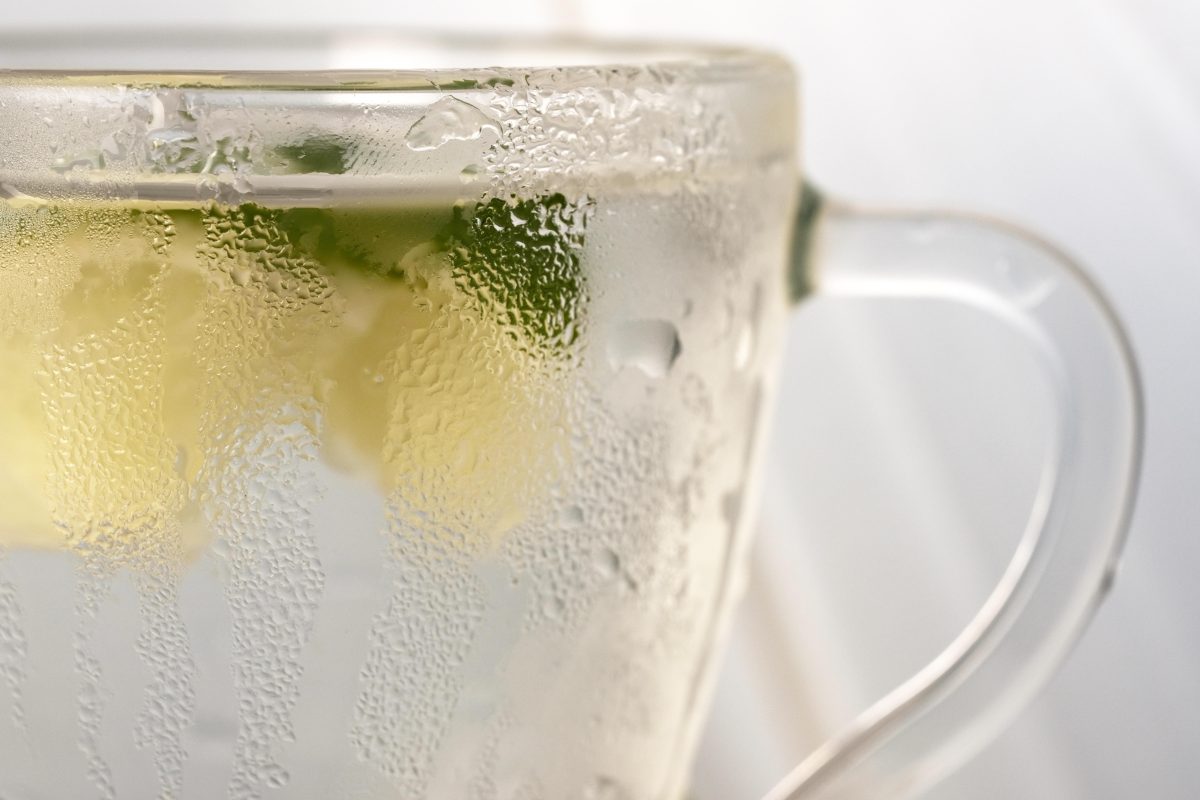
The droplets on a cold glass in summer show the same physical principle behind the fifth solution among modern technologies for producing drinking water: extracting water from the air with an atmospheric water generator.
Water isn’t created from nothing; it is already around us.
The machine cools the air below the dew point, captures the condensate, and passes it through multi-stage filtration, UV sterilization, and mineralization.
However, air is not equally generous in July and in January: at 15°C and 60% humidity, one cubic meter holds 7.7 grams of moisture, while at 30°C and 80% humidity the amount jumps more than threefold, to 24.2 grams.
Laboratory studies show that in cold air energy consumption rises sharply, and near a dew point of 2°C the machines shut down because of icing.
How the numbers compare
When we set emotions aside and look at the real numbers, the following becomes clear:
| Solution | Startup cost | What to keep in mind |
|---|---|---|
| Borehole | €3,850–8,000+ (home) / €8,000–25,000+ (business) | Large volumes with a strong flow; low running costs for pump and testing |
| Rainwater system | €1,500–4,500+ (tank + UV) | Low electricity; clean gutters, annual UV lamp; weather-dependent |
| Treat existing source | €300–1,500 (home) / €2,500–12,000+ (business) | Often fastest; moderate maintenance; fully dependent on the spring |
| Delivery | Low upfront | €0.26–0.45/L for jugs + logistics risk |
| Atmospheric generator | No digging or permits | About €0.06–0.16/L energy under favorable conditions (2026) |
A study in Nature confirms that water from air makes the most sense for drinking, rather than for irrigation.
There is no universal solution to the problem — only the one that fits your needs exactly.
That is why mature water supply for remote sites rarely relies on a single source, but rather on a water mix: technical water from the ground or rain, plus clean drinking water produced on site.
Five questions before you choose
Before choosing a system for your property, answer five questions honestly:
- How many liters per day do you actually need for drinking and cooking, compared with total technical consumption?
- Do you already have an underground or local water source, and what does its laboratory analysis show?
- Does the terrain allow access for drilling equipment and space for a large tank?
- What are the temperatures, humidity, and power supply (including photovoltaics) at the installation site?
- Are you looking for a temporary rescue or long-term peace of mind with controlled quality?
If your answers show that you’re looking for reliable drinking water on site — without digging, bottles, or other people’s schedules, and with a suitable microclimate — Cup of Air’s atmospheric generators are the most practical step.
Our team is here to help you choose together the model that best fits the conditions and consumption of your site.
Need drinking water on site — without a water mains?
Request a quoteMain sources
- MOEW, report “Bulgaria’s Water Crises”, March 2026.
- MRRB, Water regime reports (2025–2026) and Ordinance No. 4/2004.
- European Environment Agency (EEA), Europe’s State of Water 2024, 2024.
- World Health Organization (WHO), Guidelines for Drinking-Water Quality: Small Water Supplies, 2024.
- NIMH, Climatic and hydrological report for Bulgaria for 2025, 2026.
- Water Act, Ordinance No. 9/2001 and Directive (EU) 2020/2184
- Bagheri, F. (2018), Performance Investigation of Atmospheric Water Harvesting Systems, Water Resources and Industry, 20, 23–28
- Lord, J. et al. (2021), Global Potential for Harvesting Drinking Water from Air Using Solar Energy, Nature, 598, 611–617