Skip to content

Research, standards and questions about drinking water – from microplastics and PFAS to water from air.

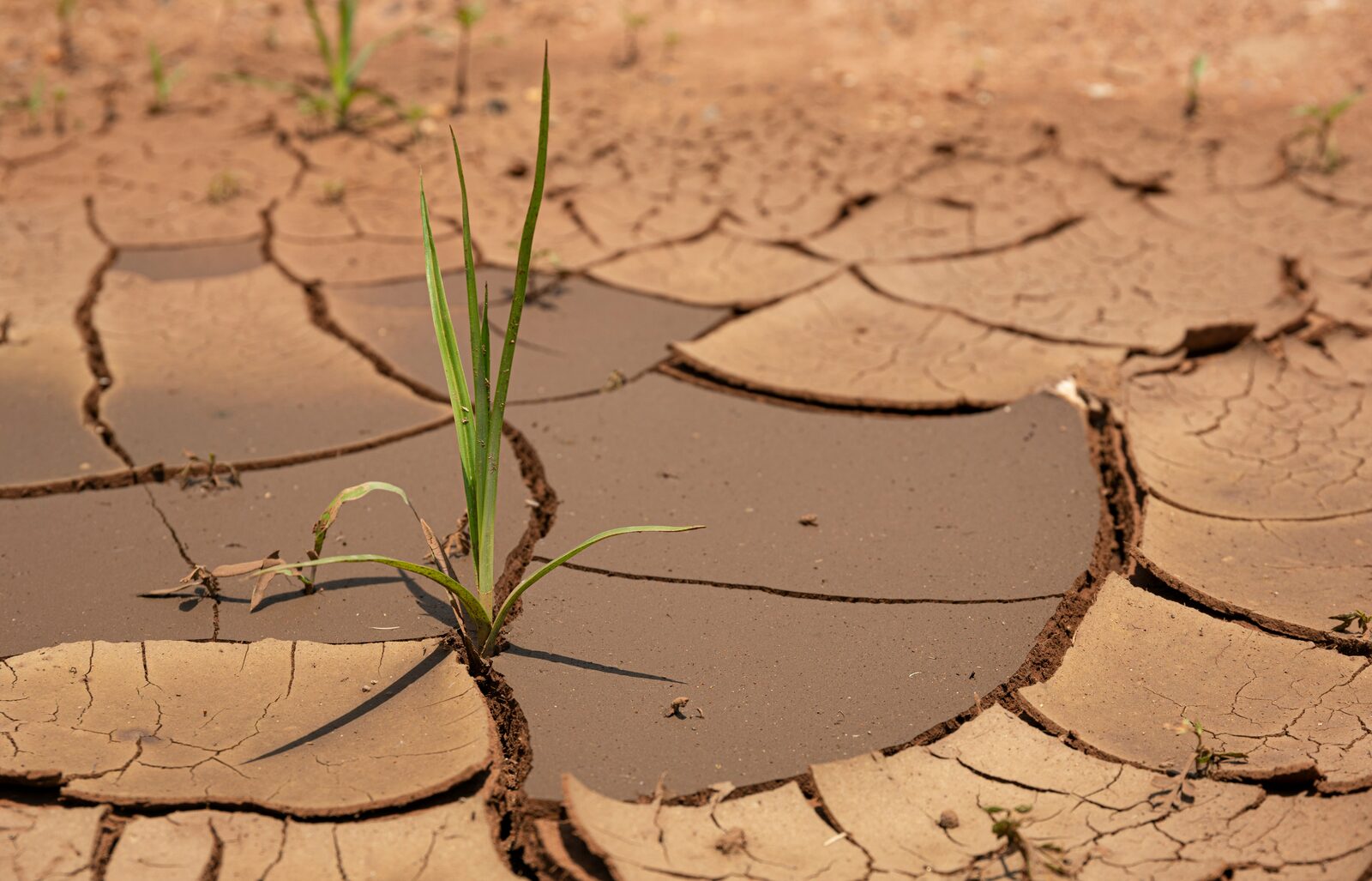
Cracked dry earth — after the carbon footprint, the water footprint

We have learned to ask how much CO₂ a company emits.

The next question is: How much water is behind it?

It is not just the water flowing from the office taps, but the water required to produce the raw materials, energy, food, packaging, and services the business utilizes.

This is the water footprint.

The water we don't see
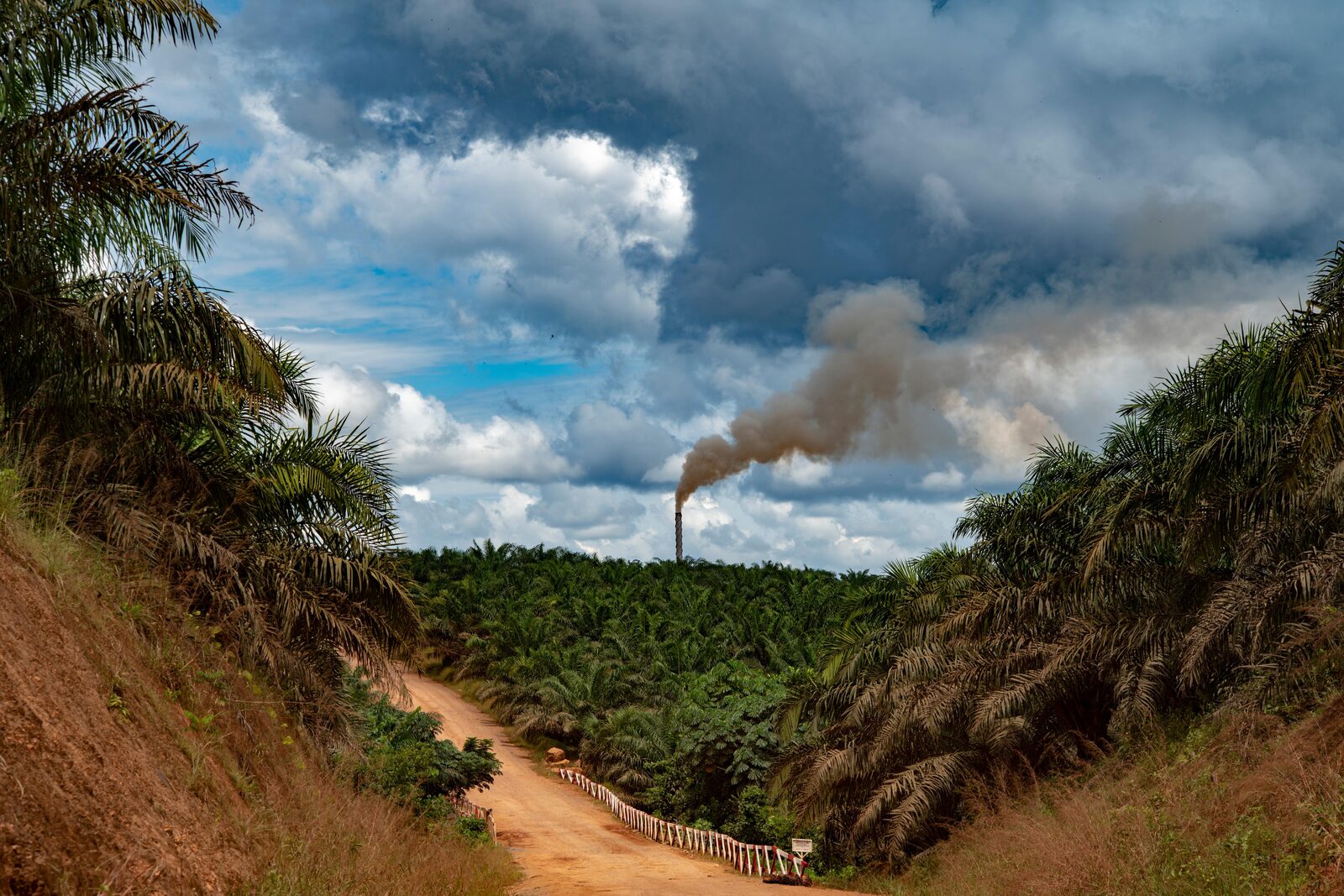
Supply chain and the hidden water footprint of business

According to the Water Footprint Network, a business's water footprint includes both direct water consumption in its own operations and indirect consumption along the supply chain.

This is exactly where the picture becomes much larger.

A company might use relatively little water in its own facilities but rely on raw materials and products whose production requires significant water resources.

Therefore, the water footprint does not simply answer the question,

"How much do we pay for water?" but rather, "How much water does our business actually depend on?"

Source: Water Footprint Network, The Water Footprint Assessment Manual.

Why Is This Question Becoming Increasingly Important?

Cracked dry earth — water scarcity and water risk

Because water can no longer be taken for granted as an unlimited resource.

According to UNESCO, approximately half of the global population experiences severe water scarcity for at least part of the year.

At the same time, global demand for freshwater has been increasing by just under 1% annually since the 1980s.

Around 70% of global water withdrawals are related to agriculture, just under 20% to industry, and about 12% to the domestic and municipal sectors.

Source: UNESCO, UN World Water Development Report 2024.

This transforms water from a utility into a business risk. Scarcity can mean:

  • higher costs;
  • production constraints;
  • supplier issues;
  • more expensive raw materials;
  • business interruptions;
  • conflicts between the business and the needs of local communities.

Europe Is Already Talking About a "Water-Smart Economy"

In 2025, the European Commission introduced the European Water Resilience Strategy.

One of the goals is to improve water efficiency in the EU by 10% by 2030.

The strategy emphasizes reducing leaks, modernizing infrastructure, digitalization, water reuse, and the development of innovative water technologies.

Source: European Commission, European Water Resilience Strategy.

This is a significant shift.

Water is no longer viewed solely as an environmental issue.

It is increasingly a matter of competitiveness, sustainability, and security.

After the Carbon Strategy, Is a Water Strategy Next?

We are already witnessing a similar shift among major multinational companies.

Microsoft, for example, aims to become water positive by 2030—meaning it will replenish more water than it consumes in its global operations.

Google reports that in 2024, it replenished approximately 4.5 billion gallons of water, reaching a 64% offset of its freshwater consumption.

Sources: Microsoft Environmental Sustainability Report 2025; Google Environmental Report 2025.

This does not mean every company must become water-positive tomorrow.

It means that a new question is entering corporate governance:

Where does our water come from, and how sustainable is this source?

What Does a Sensible Water Strategy Look Like?

There is no one-size-fits-all solution.

The future model will likely combine:

reducing consumption + measurement + reuse + alternative sources + backup solutions.

For example: more efficient sanitation systems; leak detection;

rainwater harvesting; reusing graywater and treated water;

optimizing production processes; local water generation where conditions permit.

What If Part of the Water Comes From the Air?

The atmosphere also contains water.

Atmospheric water generators utilize the humidity in the air, condense the water vapor, and after subsequent treatment, produce water on-site where it is needed.

The technology should not be viewed as a replacement for all existing water sources.

Its more interesting role lies elsewhere:

to add another source to the water mix.

For an office, hotel, enterprise, public building, or remote facility, this could mean producing a portion of the required water locally, rather than relying entirely on a single external source.

The amount of water produced depends on the temperature, relative humidity, the specific technology, and the energy efficiency of the system.

The Next Major Metric?

Years ago, the carbon footprint was a term known mainly to specialists.

Today, it is present in strategies, investment decisions, and annual reports. A similar evolution may happen with water.

Because the question of the future will not merely be: "How much water do we use?", the focus is shifting to "How dependent are we on it, and what happens if access to it changes?"

Sources

  • UNESCO / UN-Water — UN World Water Development Report 2024
  • European Commission — European Water Resilience Strategy
  • Water Footprint Network — The Water Footprint Assessment Manual
  • World Resources Institute — Corporate Water Benefit Accounting / Corporate Water Risk
  • Microsoft — Environmental Sustainability Report 2025
  • Google — Environmental Report 2025

test test
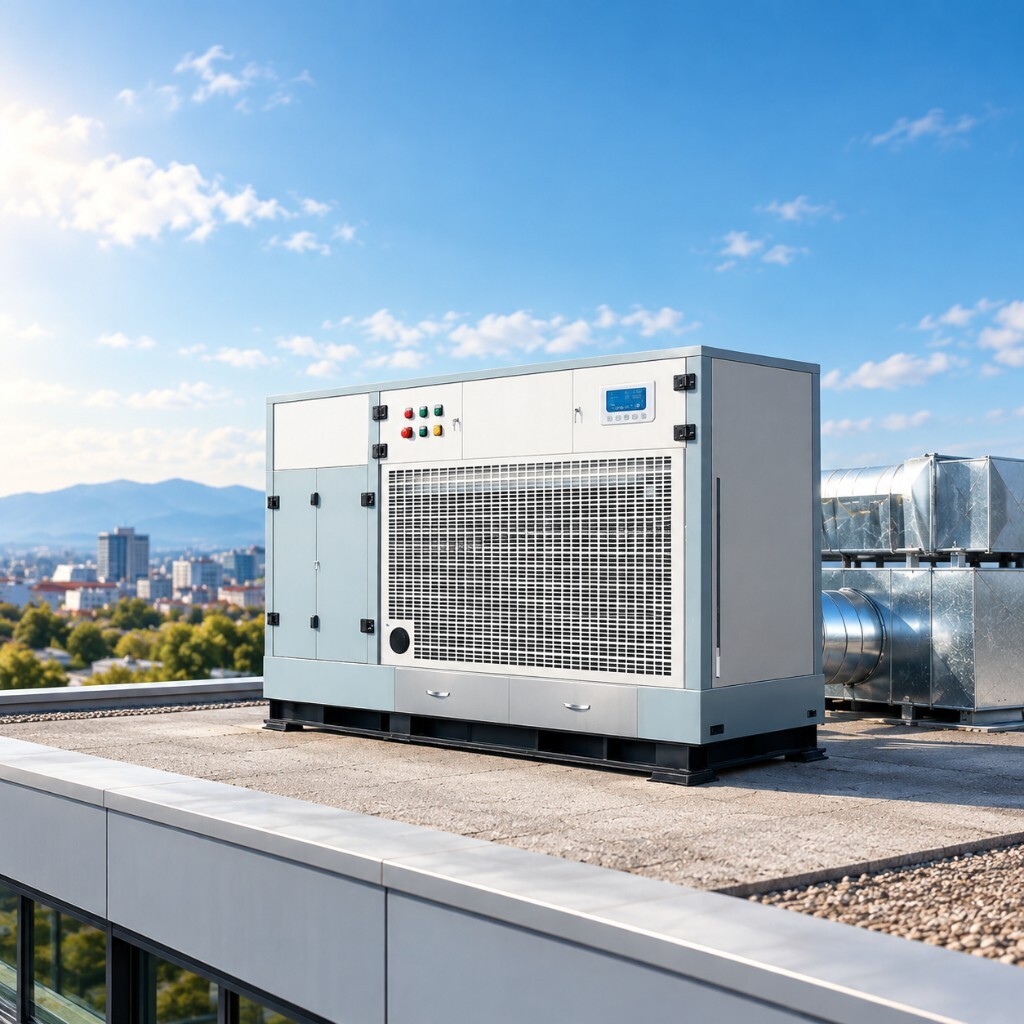
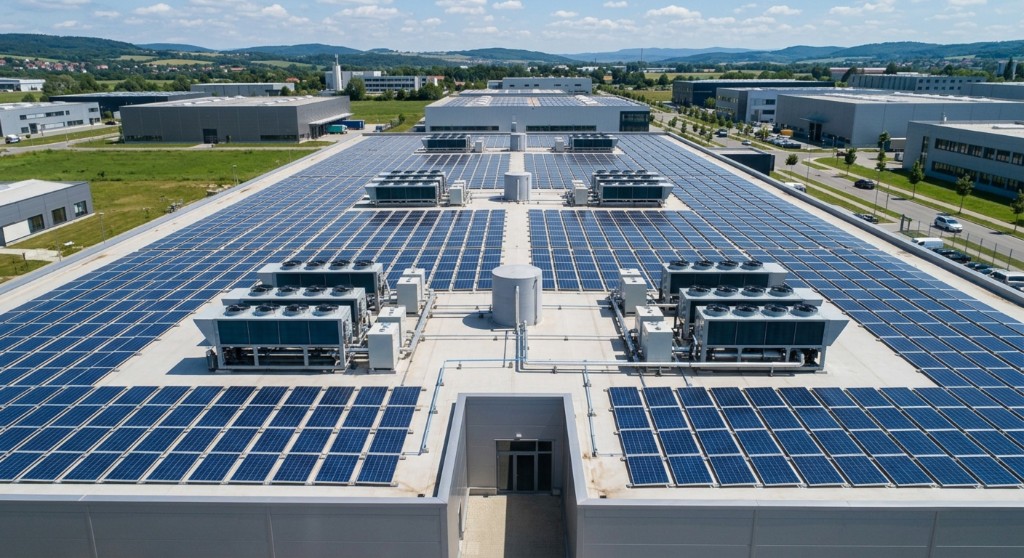
Atmospheric water generator on a rooftop next to solar panels

About twenty years ago, a building’s roof had a relatively simple job. Today it increasingly hosts technology that produces part of the energy people need inside.

Industrial rooftop with solar panels and cooling installations

This is one of the more interesting shifts in how we think about buildings. They are gradually stopping being only end points of large infrastructure networks and starting to produce, store and manage resources themselves.

Photovoltaics are the most visible example. According to the International Energy Agency, global electricity generation from solar PV roughly doubled between 2021 and 2024. In 2024 alone, the increase was about 480 TWh.

More interesting than the numbers themselves is the change in mindset. We no longer find it unusual for a hotel, logistics hub, factory or private home to produce part of its own electricity.

With water, we still mostly think in the old model.

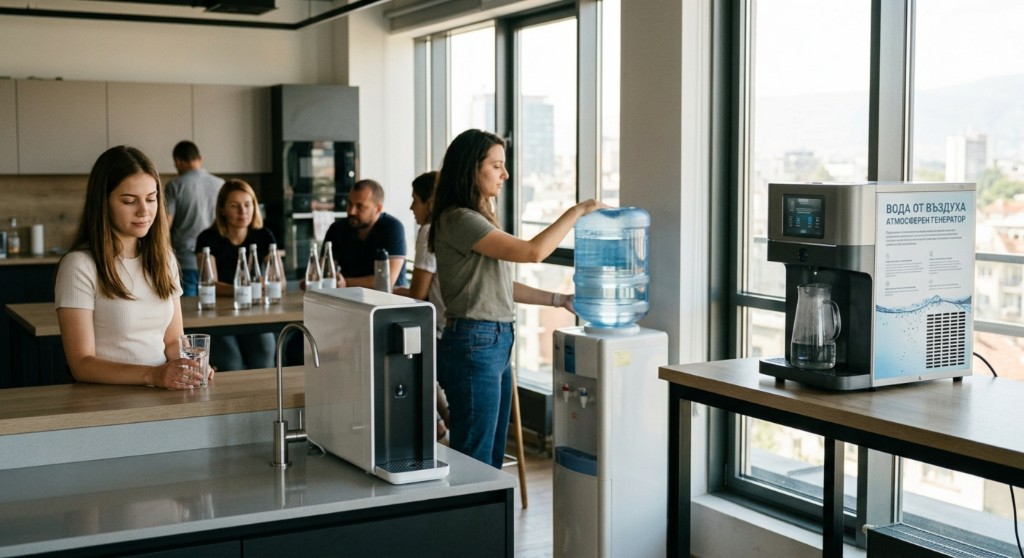
Office kitchen showing four water options: filter, bottled water, dispenser and atmospheric water generator

Choosing water for a home or office usually comes down to price, taste and convenience. We buy bottles, order dispenser jugs or install a filter — and rarely stop to notice that behind these seemingly similar options sit completely different supply models.

In recent years another option has been added: atmospheric water generation. It is not simply another filtration method, but a different approach: instead of treating water we already have, it uses moisture in the air as the primary source.

That is why the four options are better compared not only by what ends up in the glass, but by where the water comes from, how it reaches us, and what its availability depends on.

Sustainable building with on-site energy and water production

Until recently, a sustainable building mainly meant one thing: consuming less.

Better insulation. More efficient heating and cooling. Lower electricity and water use.

Today the idea is shifting. The more interesting question is no longer only “How do we reduce consumption?”, but:

“How much of the resources it needs can the building itself produce?”

Children filling bottles from an atmospheric water generator at school

Every day, thousands of children in Bulgaria turn on the same tap.

In kindergarten. In the school corridor. In the canteen.

They pour a glass of water and drink it.

But how often do we ask:

What exactly are our children drinking?

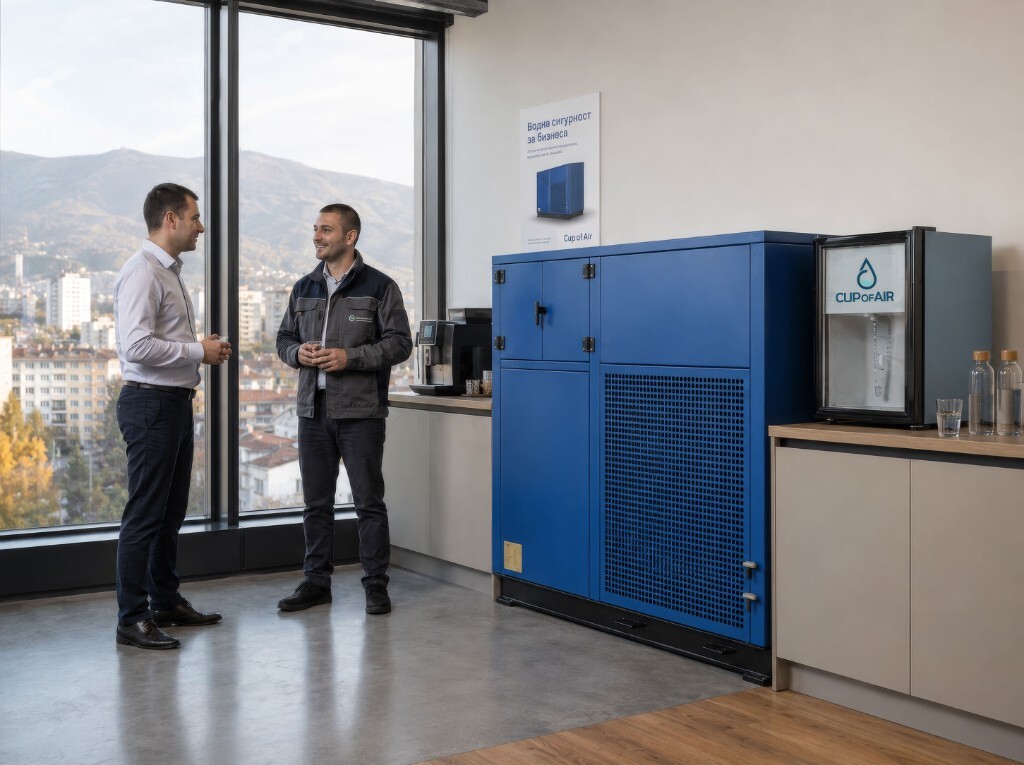
Bulgaria water crisis – dry village fountain and Cup of Air atmospheric water generators

Bulgaria has water resources. And yet we increasingly talk about water rationing, network losses, drought and uncertain supply. How is that possible?

The new analysis by the Ministry of Environment and Water, “Water crises in Bulgaria – analysis and solutions”, makes an important point: the country’s water crisis should not be seen as a series of isolated failures or temporary difficulties.

It is a systemic problem.

And perhaps the most important conclusion is that the question is not only whether Bulgaria has water, but how effectively we manage, store and deliver it where it is needed.

Rippling water surface

The hidden journey of water from the source to the glass

We open the tap. We fill a glass. We drink.

The whole process takes a few seconds, and we rarely think about what happened before that.

But the water that reaches a home, office, hotel or production building has often travelled a long way. It has been taken from a natural source, treated, purified, stored, pumped and transported through kilometres of infrastructure.

And along that path, some of it never reaches the end user.

That turns a seemingly simple question — “Where does our water come from?” — into a more interesting one:

How much of the water we abstract do we actually get to use?

How much water is actually in the air around us?

On a hot summer day we feel it on our skin. We see it as droplets on a cold glass. In the morning we find it as dew on the grass, and in winter as condensation on the windows.

Water is around us even when we cannot see it.

It is in the air in the form of water vapour, and depending on temperature and humidity its amount can be surprisingly large.

That raises an interesting question:

If the water is already in the air around us, can we use it as a water source?

To answer, we first need to understand how much water is actually there.

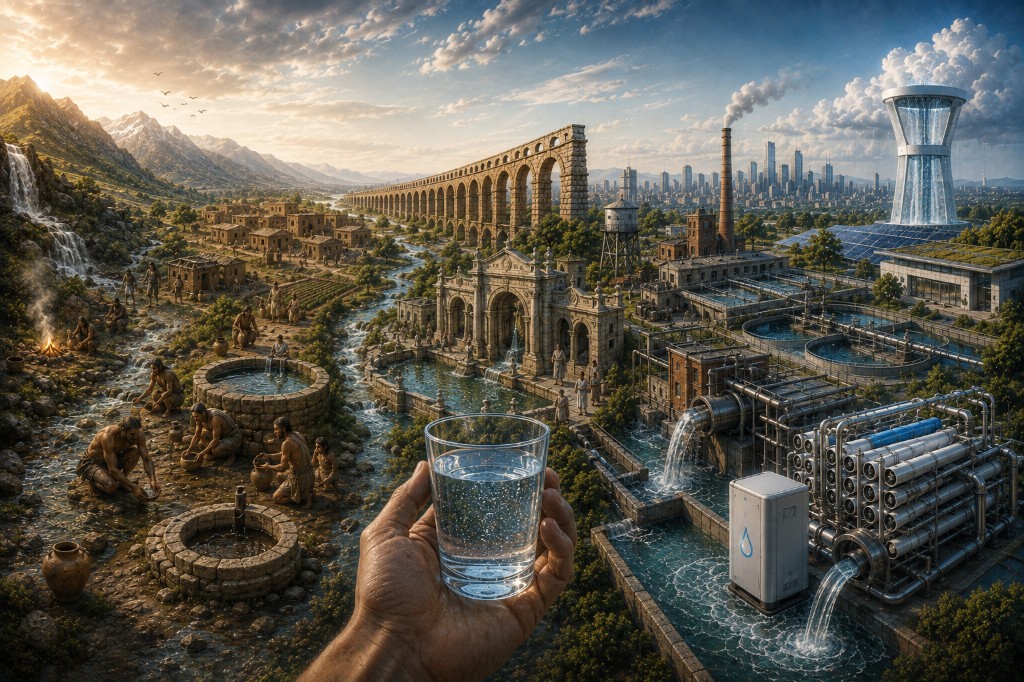
How humanity learned to drink water – and why the next source may be the air

From the first springs and wells to aqueducts, cholera, chlorination, reverse osmosis and atmospheric water generators – the history of drinking water is in fact the history of human civilization.

Water is such a natural part of daily life that we rarely stop to think how unusual an achievement a glass of safe drinking water really is.

We turn a tap. We open a bottle. We press a button on a dispenser.

But behind this apparently elementary act stand millennia of observation, engineering, epidemics, scientific discoveries and technological revolutions.

Humanity understood very early that it cannot exist without water. It took thousands of years, however, to understand something far more complex: the presence of water and the presence of safe drinking water are two completely different things.

It is precisely this distinction that changes history.

Today we already know how to purify river water, desalinate seawater, recycle wastewater and even extract water from the air.

To understand the significance of these technologies, we need to trace how one of humanity’s oldest questions has changed:

Where will we get water?

Page 1 of 2

© 2026 Cup of Air. All Rights Reserved.