Research, standards and questions about drinking water – from microplastics and PFAS to water from air.

How much water is actually in the air around us?

On a hot summer day we feel it on our skin. We see it as droplets on a cold glass. In the morning we find it as dew on the grass, and in winter as condensation on the windows.

Water is around us even when we cannot see it.

It is in the air in the form of water vapour, and depending on temperature and humidity its amount can be surprisingly large.

That raises an interesting question:

If the water is already in the air around us, can we use it as a water source?

To answer, we first need to understand how much water is actually there.

How humanity learned to drink water – and why the next source may be the air

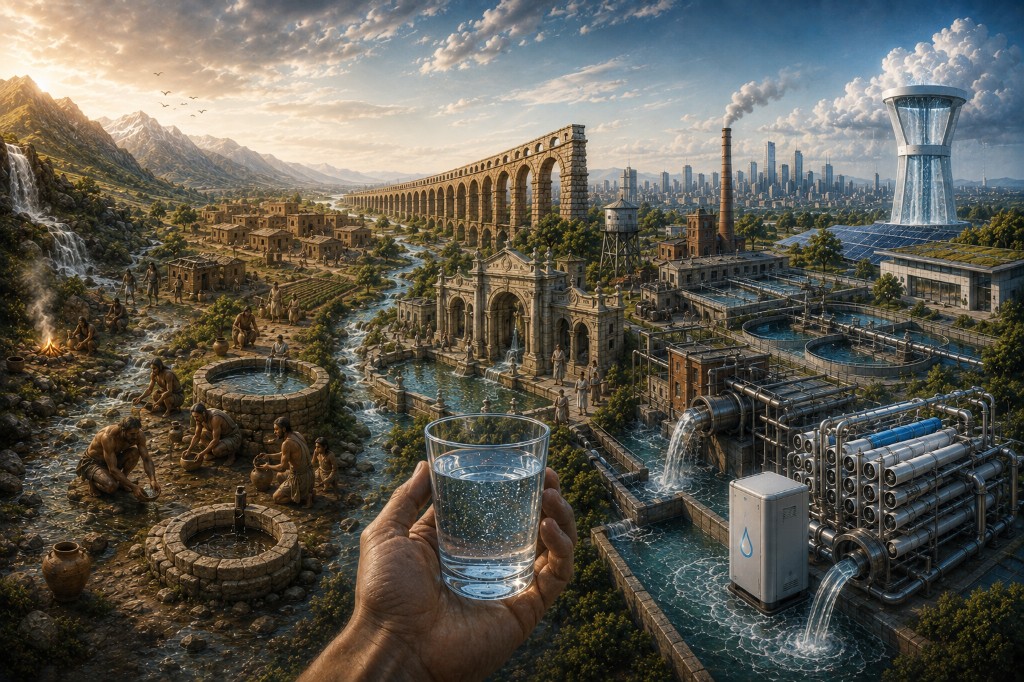
From the first springs and wells to aqueducts, cholera, chlorination, reverse osmosis and atmospheric water generators – the history of drinking water is in fact the history of human civilization.

Water is such a natural part of daily life that we rarely stop to think how unusual an achievement a glass of safe drinking water really is.

We turn a tap. We open a bottle. We press a button on a dispenser.

But behind this apparently elementary act stand millennia of observation, engineering, epidemics, scientific discoveries and technological revolutions.

Humanity understood very early that it cannot exist without water. It took thousands of years, however, to understand something far more complex: the presence of water and the presence of safe drinking water are two completely different things.

It is precisely this distinction that changes history.

Today we already know how to purify river water, desalinate seawater, recycle wastewater and even extract water from the air.

To understand the significance of these technologies, we need to trace how one of humanity’s oldest questions has changed:

Where will we get water?

What is actually in the water we drink? 7 things worth knowing in 2026

Water looks transparent. It has no smell. Its taste is normal.

Does that mean we know what is in it?

Not quite.

Drinking water quality cannot be judged by colour, taste or smell alone. Water naturally contains minerals, and depending on the source, the pipe network and the environment, microorganisms, metals and various chemical compounds may also be present.

That does not mean we should be afraid of water. On the contrary.

In 2026 we have better analytical methods, stricter standards and far more information about what is in the water we drink.

Here are 7 things worth knowing.

Microplastics in bottled water

Bottled water looks like one of the most tightly controlled products we buy – transparent, sealed and protected from the outside world.

But in recent years, more and more studies have found microplastics and nanoplastics in bottled water.

How many are there? Where do they come from? And most importantly – do we know whether they are dangerous?

Here is what the science shows as of 2026.

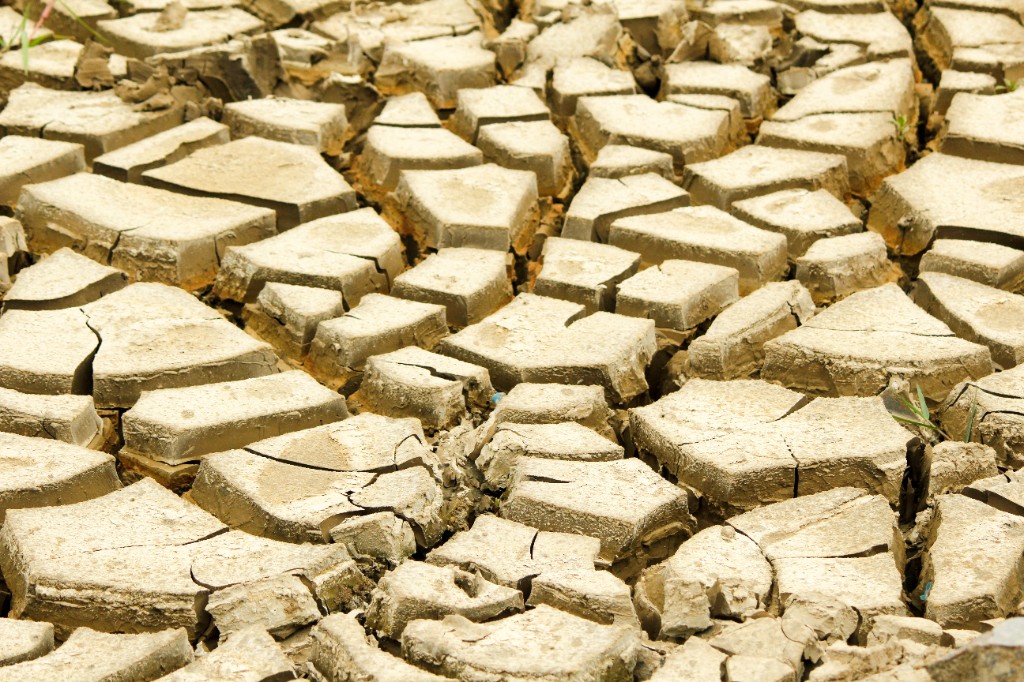
Will there be enough water? How climate change is reshaping Europe’s water security

Europe is not a continent we usually associate with a lack of water. We have rivers, lakes, reservoirs, groundwater and developed water-supply infrastructure.

And yet water scarcity in Europe is no longer a problem of the future alone.

According to the European Environment Agency (EEA), around 30% of EU territory and one third of the population are affected by water scarcity during at least one period of the year.

In 2023, that was 28% of the territory and 32% of the EU population.

And climate change poses an increasingly important question:

Will we have enough water where and when we need it?

Water from air vs bottled water

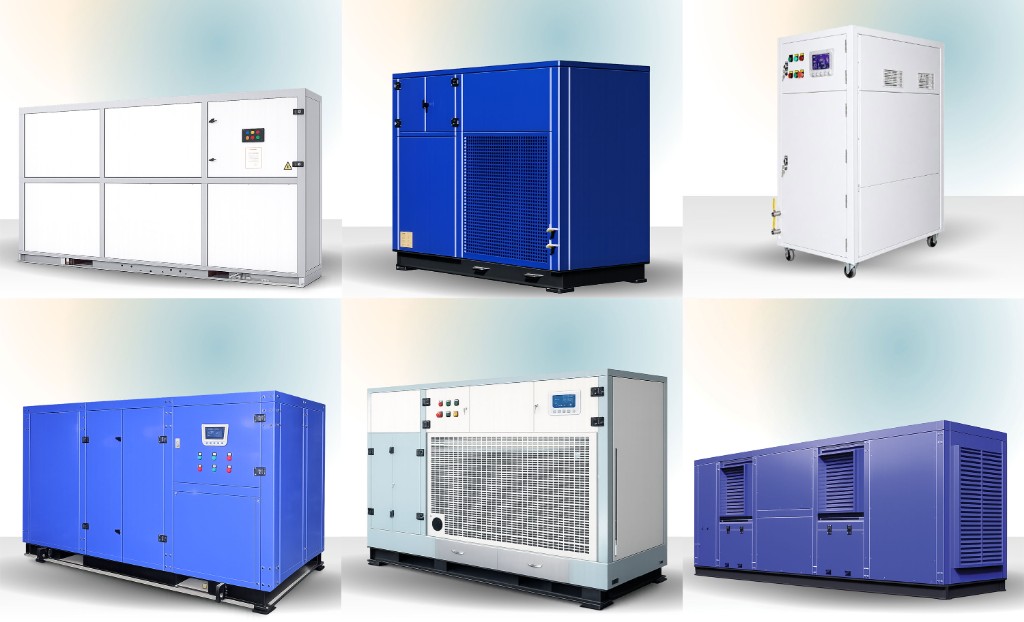
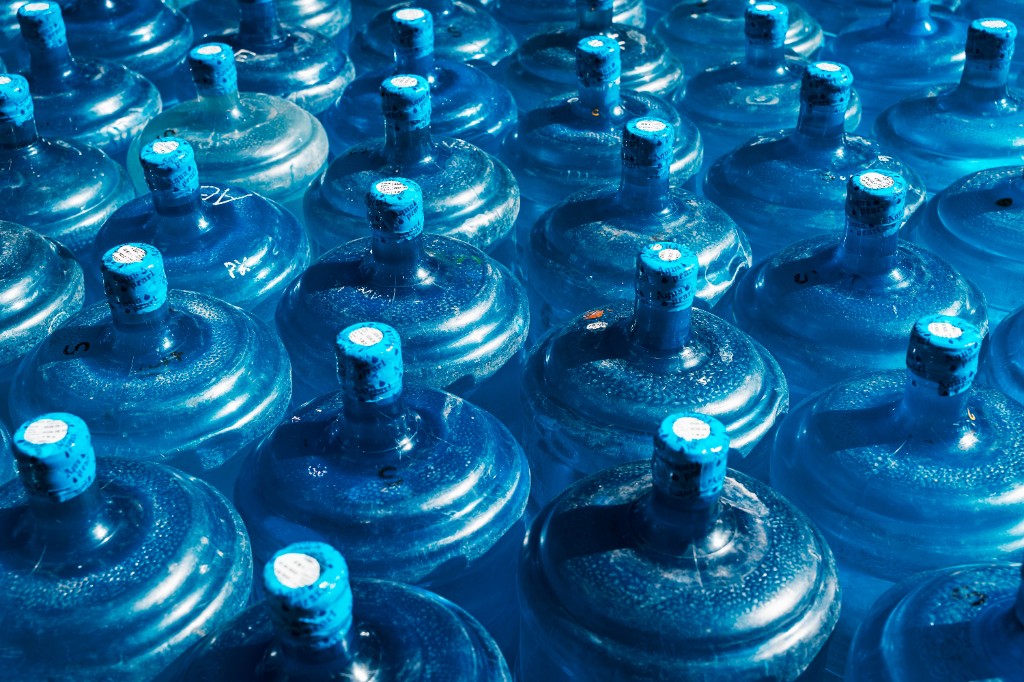
Bottled water looks convenient until you add up deliveries, gallon storage and plastic. An atmospheric generator makes the water on site and removes that logistics chain.

Page 3 of 3

Where there's air, there's a way to water.