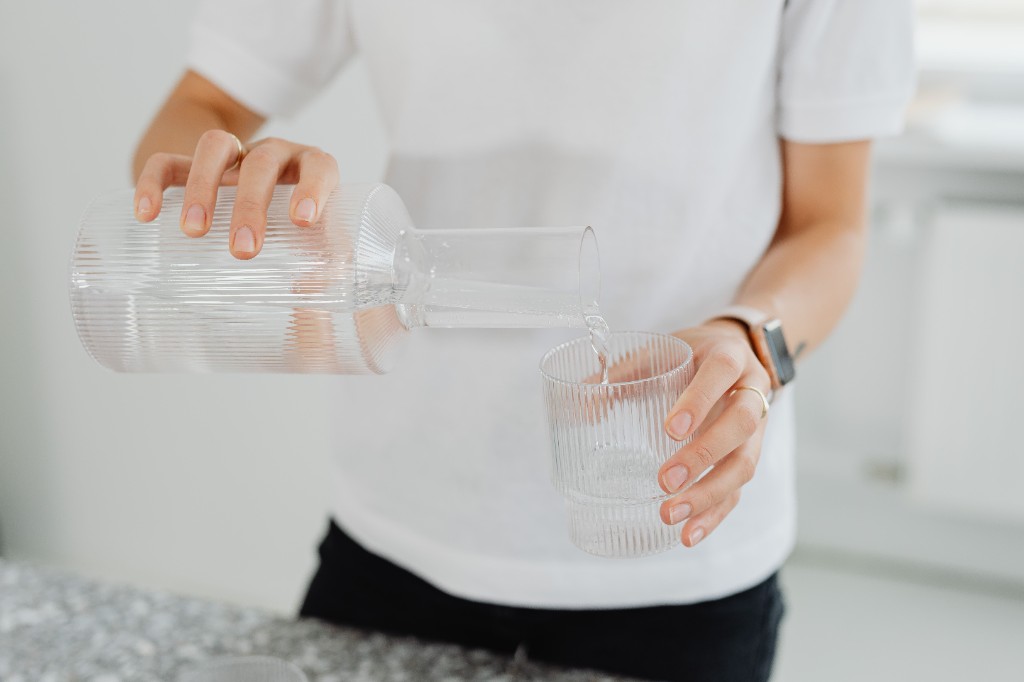
Water looks transparent. It has no smell. Its taste is normal.
Does that mean we know what is in it?
Not quite.
Drinking water quality cannot be judged by colour, taste or smell alone. Water naturally contains minerals, and depending on the source, the pipe network and the environment, microorganisms, metals and various chemical compounds may also be present.
That does not mean we should be afraid of water. On the contrary.
In 2026 we have better analytical methods, stricter standards and far more information about what is in the water we drink.
Here are 7 things worth knowing.
1. Clear water does not automatically mean controlled water
A glass can look perfectly clean, and yet only laboratory analysis can show its real characteristics.
European rules for safe drinking water include microbiological and chemical parameters. For E. coli and intestinal enterococci, for example, the requirement is 0 in 100 ml of water. Arsenic, lead, mercury, nitrates, pesticides, bisphenol A, PFAS and a number of other substances are also monitored.
So there is an important difference between:
“The water looks clean.”
and
“The quality of the water is controlled.”
That is the first thing we need to know as consumers.
2. Bacteria and other microorganisms remain a core safety indicator
When we talk about drinking water pollution, attention often turns to new and exotic-sounding chemicals.
But from a global perspective, microbiological contamination remains the most serious immediate risk to drinking water safety.
WHO notes that faecal microbiological contamination is the greatest risk to drinking water safety worldwide. Contaminated water can carry pathogens that cause diseases such as cholera, dysentery and typhoid fever.
That is one reason modern water systems do not rely on a single filter.
A full process for managing water quality is needed.
3. Minerals in water are not “pollution”
Here there is a very important distinction.
Calcium, magnesium and other mineral substances can occur naturally in water.
The mere presence of minerals does not make water “dirty”.
The mineral composition depends on its origin and the path the water has taken through the natural environment.
So the claim that “the fewer substances water contains, the better it is” is too simplistic.
For drinking water, composition, concentration and control matter – not simply the number of substances detected.
4. Heavy metals cannot be recognised by taste or colour
Among the parameters controlled by European legislation are lead, arsenic, cadmium, mercury, nickel and other chemical substances.
For example, the European Drinking Water Directive sets a value of 10 μg/l for arsenic, while for lead a value of 10 μg/l applies until 2036, when the stricter value of 5 μg/l must be reached.
Why does this matter to an ordinary consumer?
Because water quality does not depend only on the water source itself.
The infrastructure the water passes through before it reaches the glass can also matter.
WHO/Europe lists arsenic, fluoride, lead and nitrates among the priority chemical contaminants of drinking water in the European region.
5. PFAS are now part of the wider European conversation on drinking water
You may have come across the phrase “forever chemicals”.
It is usually used for PFAS – a large group of per- and polyfluoroalkyl substances characterised by high persistence in the environment.
PFAS in water is one of the most important new topics in 2026.
From 12 January 2026, EU member states must monitor PFAS in drinking water in a harmonised way against the new European limit values. This is the first systematic monitoring of PFAS in drinking water at EU level.
The European directive sets:
0.10 μg/l for “Sum of PFAS” – a defined group of 20 PFAS;
0.50 μg/l for “PFAS Total”.
That does not mean drinking water suddenly became dangerous in 2026.
It means something more reasonable:
science is advancing, we detect and measure more substances, and quality standards evolve with that knowledge.
6. And what do we know about microplastics in water?
This is one of the topics surrounded by the most sensational headlines.
Yes — microplastics have been found in both tap and bottled drinking water. WHO has been looking at this issue for years.
But here it is important to be scientifically accurate.
WHO notes that there are still significant gaps in knowledge about human exposure to micro- and nanoplastics and about potential health effects. The organisation continues to call for more high-quality research.
So the correct conclusion is not:
“Microplastics in water have been proven to make us ill.”
Science does not currently support such a categorical claim.
It is more accurate to say:
Microplastics are found in the aquatic environment and in drinking water, but the scale and health significance of human exposure remain the subject of scientific research.
That difference between fact and assumption matters when we talk about clean drinking water.
7. More attention is being paid to substances we barely talked about a few years ago
PFAS are not the only example.
The new European framework also addresses so-called emerging contaminants.
The European Commission, for example, created a watch list of certain substances in drinking water. Among the first included are 17-beta-estradiol and nonylphenol because of their properties as endocrine disruptors.
And that shows us something very important.
Our understanding of “quality drinking water” is evolving.
Decades ago we could not routinely measure some of the substances at the concentrations that can be detected today.
Today we can.
Tomorrow we will likely be able to do even more.
So which water is “clean”?
This is perhaps a more complex question than it looks.
Clean water does not necessarily mean water in which a laboratory cannot detect absolutely anything.
The more useful concept is:
controlled water.
Water for which we know:
where it comes from → what process it goes through → how it is filtered → how it is disinfected → how it is stored → how it is controlled.
Risk management “from source to consumer” also underpins the World Health Organization’s drinking-water quality guidelines, updated in June 2026.
Can we have more control over the water we drink?
This is where the conversation becomes especially interesting.
We usually think of drinking water as something that has to come from somewhere.
From the tap.
From a spring.
From a borehole.
From a plastic bottle.
From a gallon delivered to the office.
But there is another approach.
What if, instead of constantly wondering what comes through the pipes, we could control how water is created and purified at the place where we consume it?
That is the idea behind atmospheric water generators.
Water from air: a different approach to the water source
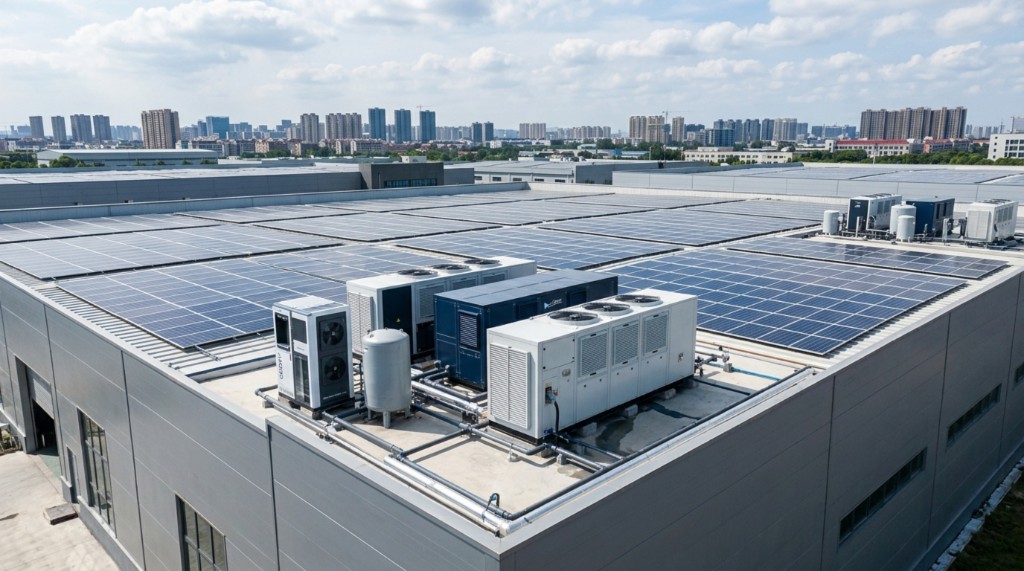
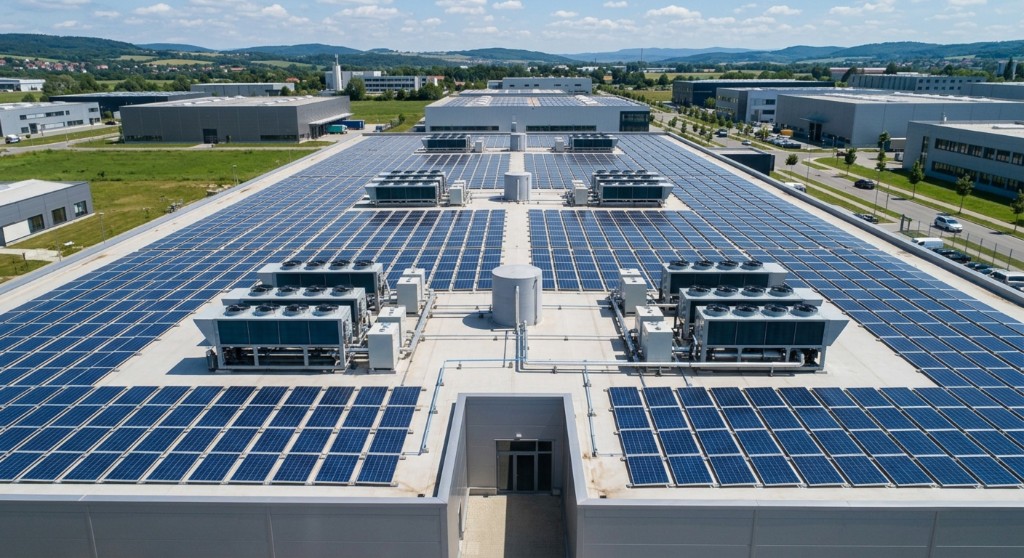
An atmospheric water generator uses the moisture that is naturally present in the air.
In Cup of Air systems, the process goes through several main stages:
air → condensation → water collection → multi-stage filtration → UV sterilisation → water for use.
The systems use 12-stage filtration and UV sterilisation, and water production depends on temperature and relative humidity.
The difference is fundamental.
Instead of treating water that has already passed through a source and piped infrastructure, we produce the water locally from atmospheric moisture and control the subsequent treatment process.
That does not mean atmospheric water is a universal solution for every scenario.
But it does mean we now have another possible source of drinking water – especially relevant for homes, offices, hotels, businesses and places without a reliable water supply.
Perhaps the future of water is not only how we purify it, but also where we get it from
In 2026 we know more than ever about drinking water quality.
We monitor microorganisms.
We control metals and pesticides.
Europe now monitors PFAS.
We study microplastics.
We look for new contaminants.
And laboratory technologies are becoming more precise.
So perhaps the right question is no longer only:
“Does my water look clean?”
But: “How much do I know about the water I drink?”
And one more: “How much control do I have over its origin and how it has been treated?”
That is exactly the question from which the Cup of Air philosophy begins.
Not to make you afraid of water.
But to give you the chance to know more about it – and, when it makes sense, to produce your own water where you need it.
Want advice on the right model?
Request a quote