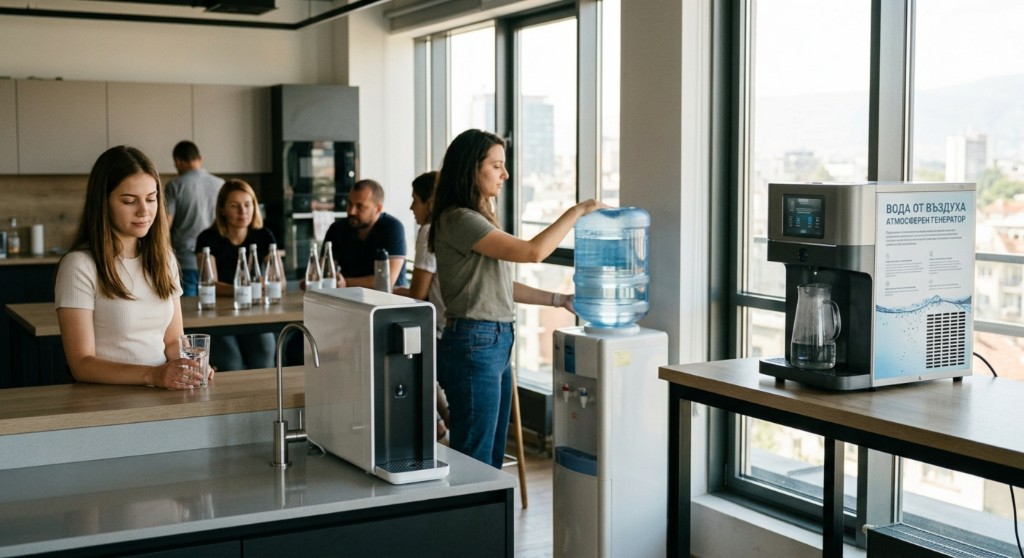
Every day, thousands of children in Bulgaria turn on the same tap.
In kindergarten. In the school corridor. In the canteen.
They pour a glass of water and drink it.
But how often do we ask:
What exactly are our children drinking?
32,033 samples. 2,024 non-compliances.
According to Ministry of Health data for 2024, 32,033 drinking-water samples in Bulgaria were tested for organoleptic and physico-chemical indicators.
In 2,024 of them — 6.37% — non-compliance with the requirements for the indicators tested was found.
It is important to clarify: these figures cover drinking-water monitoring for the country as a whole, not specifically every school and kindergarten.
But the numbers raise an important question:
When it comes to our children, is it enough simply to take water quality for granted?

What can drinking-water monitoring reveal?
Water quality is not defined only by whether it looks clear and tastes good.
Monitoring covers various microbiological, chemical and physico-chemical indicators.
Among the issues the Ministry of Health reports in certain supply zones are nitrates, which remain among the more common chemical non-compliances of health significance — especially in small supply zones.
Indicators related to microbiological quality, chemical composition, turbidity, odour and other characteristics are also tracked.
And there is something else that matters.
Water may leave the supply system with certain indicators, but before it reaches the glass it passes through infrastructure — pipes, building installations, tanks and other facilities.
The last few metres matter too.
A real case: bacteria in samples from childcare and schools
In 2025, after the floods in Burgas Province, the regional health inspectorate found coliform bacteria in samples taken from points in two kindergartens and one school.
The measured values were 23, 13 and 12 CFU/100 ml against a regulatory requirement of 0/100 ml.
This was an emergency situation after a natural disaster and should not be presented as the normal state of water in Bulgarian schools.
But it shows something important:
Water quality and access can be affected by factors beyond the school’s own control.
So what if an educational institution also had its own local source of drinking water?
What if the school could produce water?
It sounds futuristic, but the technology already exists.
The air around us constantly contains water vapour.
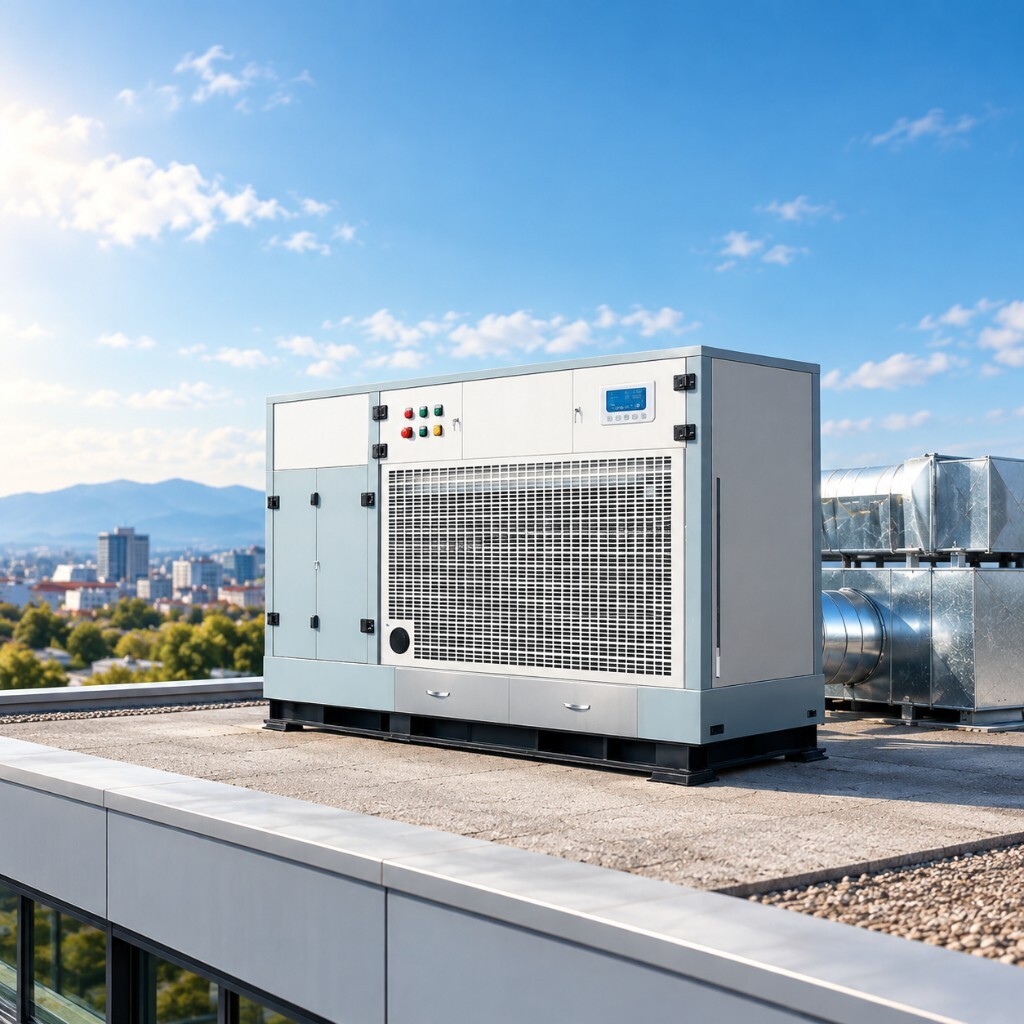
Cup of Air uses that atmospheric moisture as a source to generate water.
Instead of drinking water arriving in bottles or being taken directly from the mains, the system uses the air around it.
The process goes through several stages:
Air → condensation → treatment → multi-stage filtration → UV sterilisation → water
That creates an additional independent source at the place where the water will be consumed.
More about the process: How an atmospheric water generator works.
Up to 100 litres of water in 24 hours from one machine
The Cup of Air AGO-100 model is designed for spaces with higher consumption, including schools and kindergartens.
Under the system’s stated nominal conditions, it can generate up to 100 litres of water in 24 hours.
That is:
- 200 glasses of 500 ml
- or 500 glasses of 200 ml.
The actual amount produced depends on temperature and relative humidity.
For larger educational complexes, the required capacity can be calculated from the number of children, staff and daily use.
Not just an alternative to mains water
This is where we see the bigger idea.
Cup of Air should not be read as a claim that tap water is necessarily bad.
The technology gives an institution another way to provide drinking water on site.
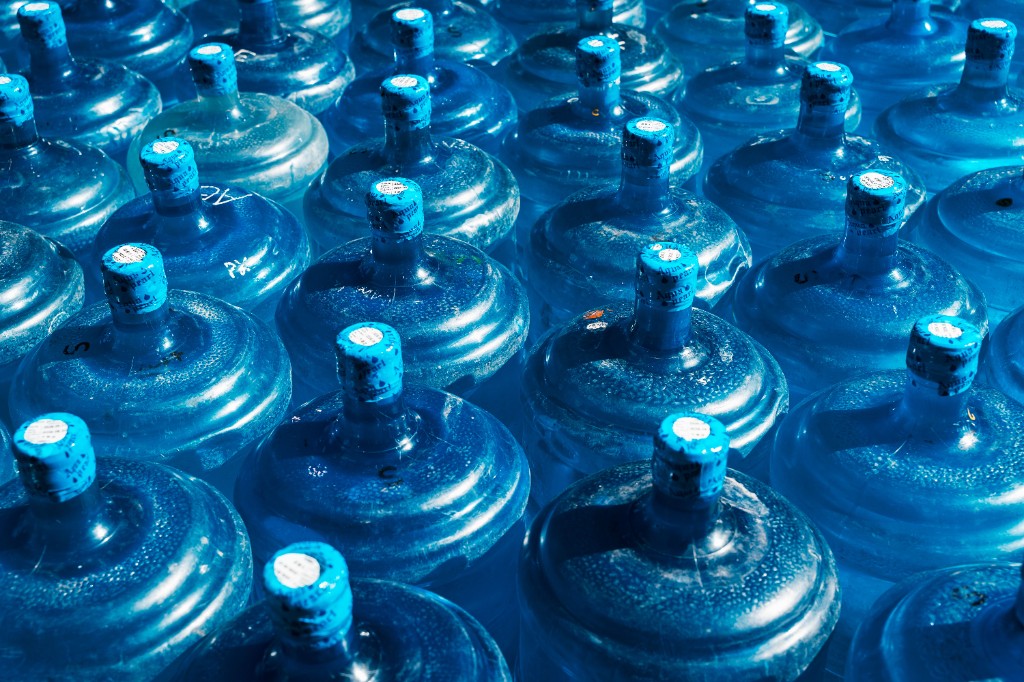
- Without constant restocking of plastic bottles.
- Without storing jerrycans.
- Without daily logistics for delivering drinking water.
And with generation and treatment happening right where the water will be used.
What does that mean for a school?
Imagine a school where children do not bring small plastic bottles every day.
Instead they have reusable bottles and designated points where they can fill them.
The water is generated on site.
It does not arrive by truck.
It does not wait in plastic packaging.
It does not need a bottle storeroom.
This is no longer only a water question.
It is part of how we can build a more modern and sustainable learning environment.
When it comes to children, quality should not be an assumption
We cannot control every kilometre of water-supply infrastructure.
We cannot prevent every breakdown.
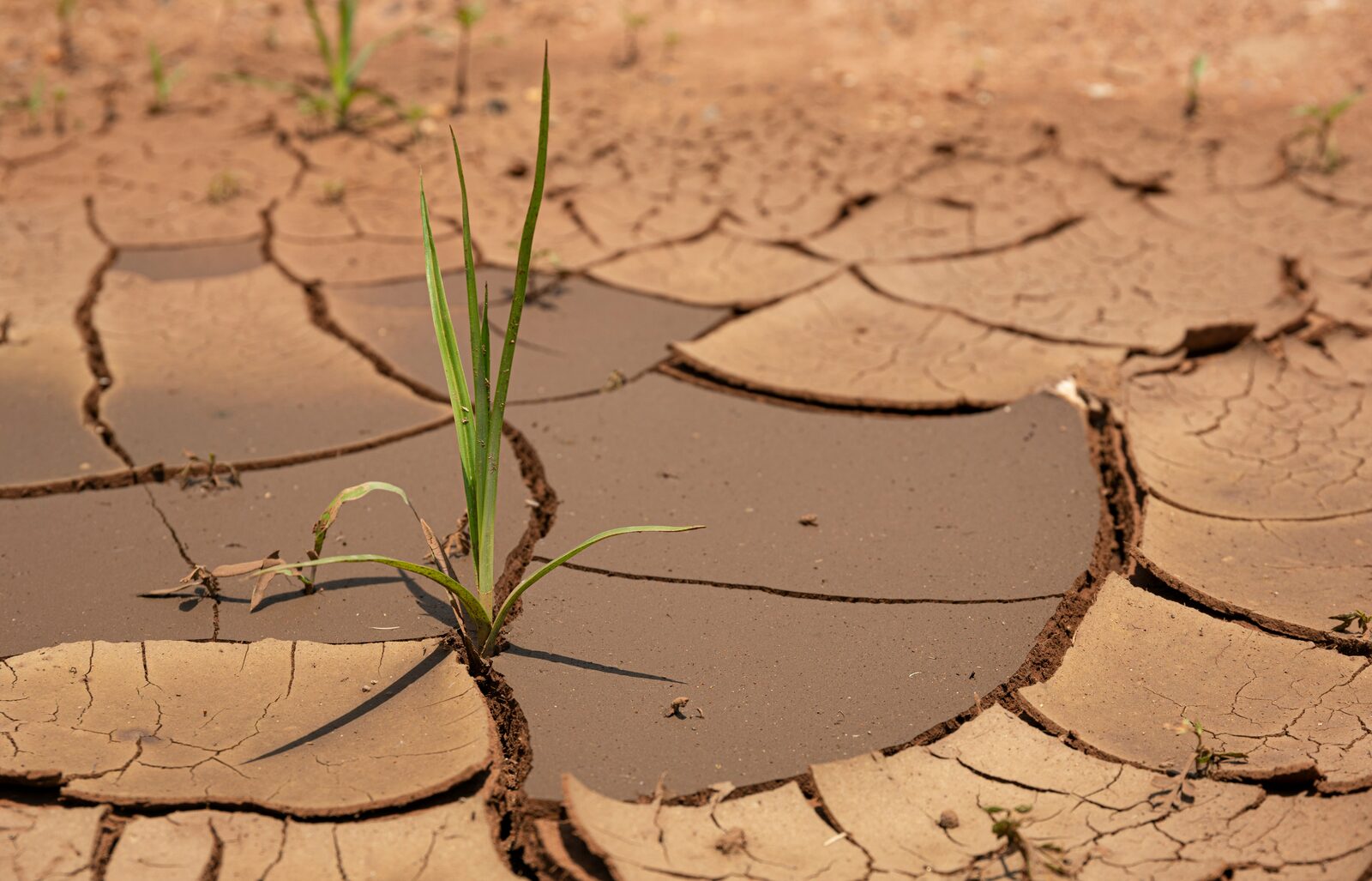
We cannot control drought, floods or every external factor that can affect supply.
But technology already lets us add another local source of water exactly where it is needed.
And perhaps this is the question we should start asking:
Not only “Is there water?”, but “How can we have more control over the water we provide to children?”
A solution for your school or kindergarten
Every educational institution has a different number of children and different daily consumption.
That is why Cup of Air can calculate the capacity needed for a specific site and propose a suitable solution for local water generation.
Contact the Cup of Air team for advice and a tailored solution for your school, kindergarten or educational complex.
Cup of Air
Water from air. Generated where it is needed.
Looking for a solution for a school or kindergarten?
Contact us