Bottled water looks like one of the most tightly controlled products we buy – transparent, sealed and protected from the outside world.
But in recent years, more and more studies have found microplastics and nanoplastics in bottled water.
How many are there? Where do they come from? And most importantly – do we know whether they are dangerous?
Here is what the science shows as of 2026.
1. Up to 240,000 plastic particles per litre?
In 2024, a study published in Proceedings of the National Academy of Sciences (PNAS) used a new technology to detect extremely small plastic particles.
In the samples analysed, scientists found an average of about 240,000 detectable plastic particles per litre of bottled water, around 90% of which were nanoplastics. (nih.gov)
Why did earlier studies find far fewer?
Not because the plastic suddenly increased, but because new technologies can detect much smaller particles that previously remained practically invisible.
An important clarification: this does not mean that every bottle of water contains exactly 240,000 particles. The result applies to the specific samples analysed and the methodology used.
2. Where do the microplastics come from?
The PET bottle itself is one possible source, but it is not the only one.
Particles can enter the water from the bottle, the cap, and the production and bottling processes.
The cap is especially interesting. Opening and closing it creates mechanical friction between plastic surfaces. Scientific studies show that this can be a source of microplastic particles. (pubs.acs.org)
That raises an important question we rarely ask:
Not only what water we drink, but what it has passed through before it reaches our glass.
3. Are microplastics in water dangerous?
Here we need to be very precise.
Science confirms the presence of microplastics and nanoplastics in drinking water, but there is still not enough data to determine exactly what the long-term health risk is at real human exposure levels.
The World Health Organization highlights precisely these knowledge gaps and the need for further high-quality research. (who.int)
So it is not accurate to say:
“Bottled water is dangerous.”
But it is now accurate to say:
“Plastic particles are found in bottled water, and science is actively studying what long-term exposure to them means.”
That distinction matters.
4. Is bottled water the only source of microplastics?
No.
Microplastics have also been found in tap water, food, air and household dust. WHO confirms their presence in different water sources. (who.int)
So giving up plastic bottles cannot fully remove human exposure.
But it can eliminate one unnecessary contact between drinking water and plastic packaging.
5. Europe is already tracking the issue
Microplastics are now part of the European conversation on drinking water quality.
In 2024, the European Commission adopted a harmonised methodology for measuring them in water intended for human consumption. The aim is for results from different laboratories to be compared more reliably. (joint-research-centre.ec.europa.eu)
That means that in the coming years we will likely have a much clearer picture of microplastics in drinking water in Europe.
What can we do today?
There is no reason for panic. There is a reason for an informed choice.
We can limit the use of single-use plastic bottles, not leave them in strong heat or direct sun, use suitable reusable containers, and pay more attention to the origin, filtration and storage of water.
And that brings us to a larger question.
What if water did not have to travel to us in a plastic bottle?
The usual model is:
water source → treatment → bottling → transport → warehouse → shop or office → consumer → plastic waste.
But technologies already exist that make it possible to produce water where it will be consumed.
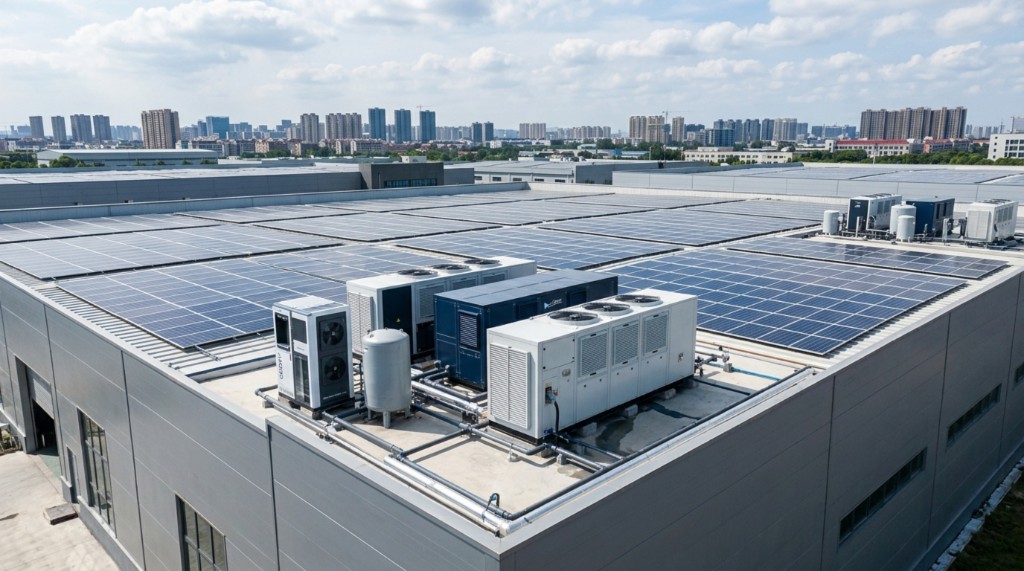
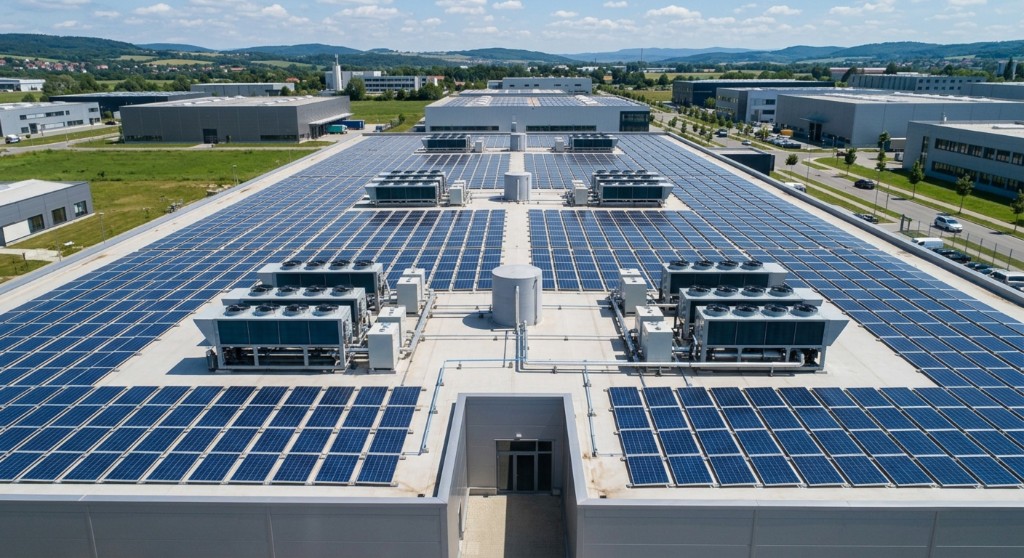
Atmospheric water generators use moisture in the air, condense it and treat the resulting water.
At Cup of Air, the process includes multi-stage filtration and UV sterilisation.
That does not mean we should claim atmospheric water is “magically pure” or that it can never contain microparticles. The quality of any water depends on the technology, maintenance and control.
The advantage is different:
drinking water can be produced locally, without the finished water having to be bottled, transported and stored in single-use plastic bottles.
Perhaps that is why the question of the future will not only be:
“Which bottled water should I choose?”
“Can we get quality drinking water with less dependence on the plastic bottle?”
That is exactly where the idea of Cup of Air begins – water produced where it is needed.
Want advice on the right model?
Request a quote