On a hot summer day we feel it on our skin. We see it as droplets on a cold glass. In the morning we find it as dew on the grass, and in winter as condensation on the windows.
Water is around us even when we cannot see it.
It is in the air in the form of water vapour, and depending on temperature and humidity its amount can be surprisingly large.
That raises an interesting question:
If the water is already in the air around us, can we use it as a water source?
To answer, we first need to understand how much water is actually there.
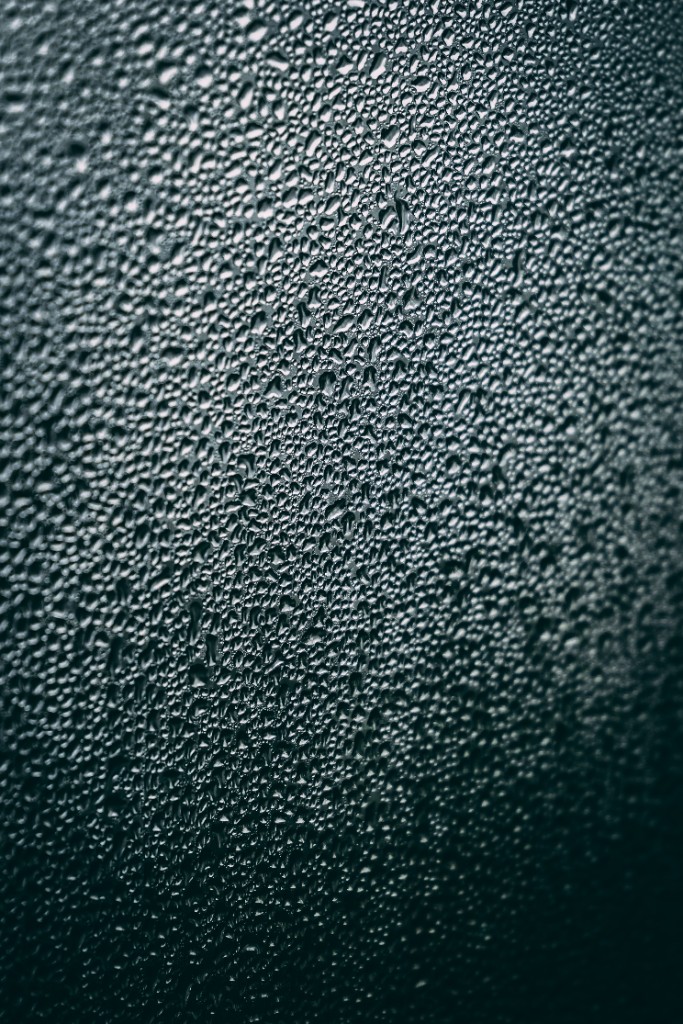
A simple experiment we have all done
Take a cold bottle of water out of the fridge and leave it on the table in summer.
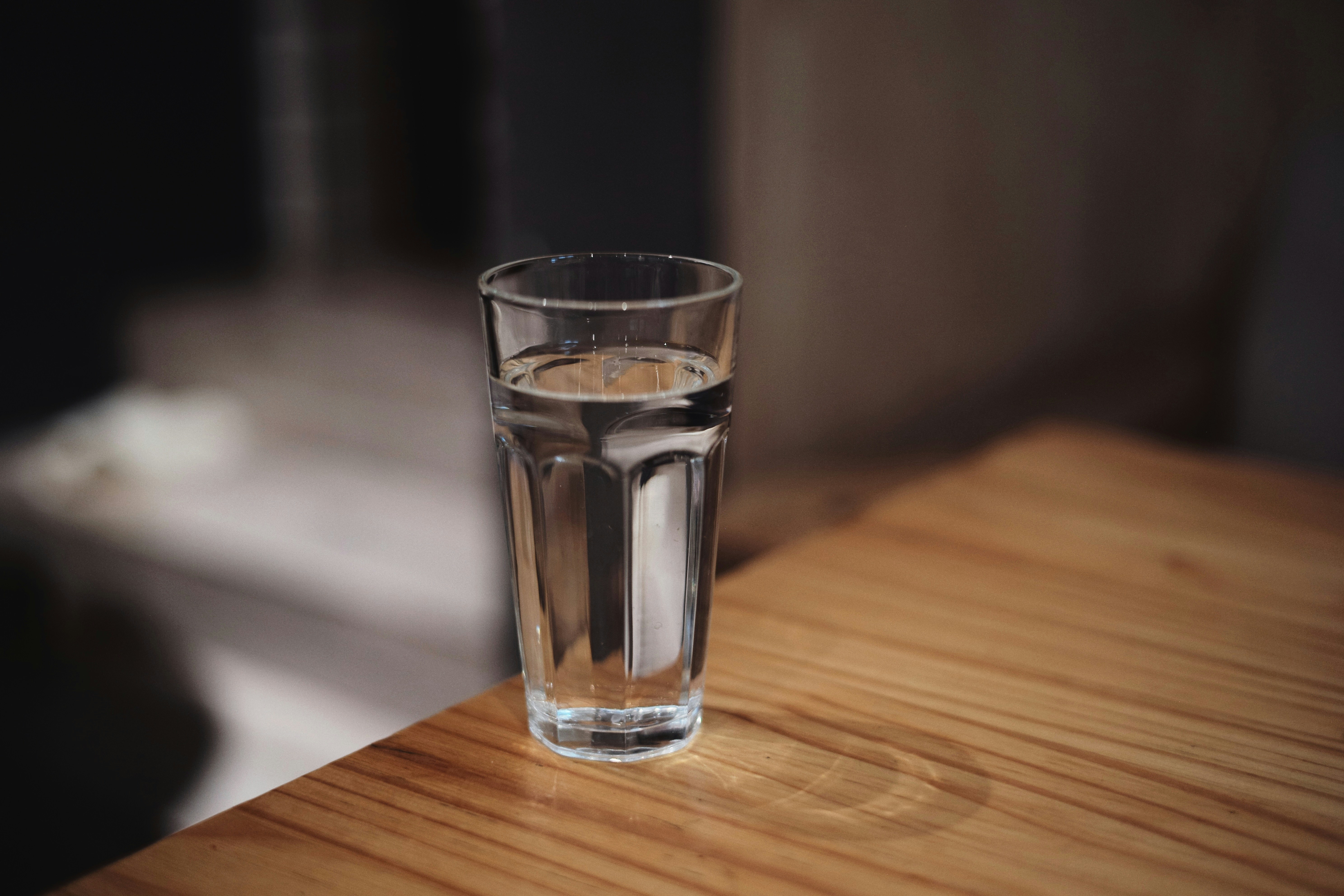
After a few minutes, small droplets start to appear on the outside.
The water has not passed through the bottle.
It has come from the air.
The air around the cold surface cools. When it reaches a certain temperature – the so-called dew point – some of the water vapour changes from a gas to a liquid.
That is condensation.
The same physical process is behind dew on the grass, a steamed-up mirror after a shower, and droplets on a cold window.
And it is precisely this familiar natural principle that underlies one of the methods for generating water from air.
But how much water is there in 1 cubic metre of air?
This is where it gets interesting.
The amount of water in the air depends mainly on temperature and relative humidity.
When the weather forecast shows, for example, “60% humidity”, that does not mean that 60% of the air is water.
Relative humidity shows how saturated the air is with water vapour compared with the maximum amount it can hold at that temperature.
And temperature matters enormously.
Warm air can hold significantly more water vapour than cold air.
Here is roughly how that looks:
| Temperature | Relative humidity | Water in 1 m³ of air |
|---|---|---|
| 10°C | 60% | ~5.6 g |
| 15°C | 60% | ~7.7 g |
| 20°C | 60% | ~10.3 g |
| 25°C | 60% | ~13.8 g |
| 30°C | 60% | ~18.2 g |
| 30°C | 80% | ~24.2 g |
A single cubic metre of air at 30°C and 80% relative humidity contains about 24 grams of water vapour.
At first glance that does not look like much.
But there is not just one cubic metre of air around us.
And the air is not standing still.
Let’s step into a hotel room
Take a completely realistic example.
A hotel room of 30 m² with a ceiling height of 2.7 m has about:
81 m³ of air.
If the temperature is 25°C and relative humidity is 60%, each cubic metre contains about 13.8 grams of water vapour.
So the air in the room at that moment contains about:
81 × 13.8 g = 1,118 g of water
or around:
1.1 litres of water.
It is there.
We simply cannot see it.
But there is a very important clarification here.
This does not mean that 1.1 litres of drinking water can automatically be produced from that hotel room all at once.
Still less does it mean that after extraction the room is “left without water in the air”.
Because buildings are not sealed airtight boxes.
The air is constantly exchanged.
Doors open. Ventilation runs. Outdoor air comes in. People breathe and release moisture. Air masses are constantly moving.
And that is where we begin to understand the real scale of the atmospheric water resource.
And what about a large space?
Imagine a production hall:
1,000 m² floor area × 6 m height = 6,000 m³ of air.
At 25°C and 60% relative humidity this volume of air contains about:
6,000 × 13.8 g = 82,800 g
or around:
83 litres of water in the form of water vapour.
Again – this is a snapshot theoretical estimate of the water vapour in that volume of air, not the amount of water that can necessarily be extracted from it.
But the example shows something very important:
moisture in the air is a measurable physical resource.
Outdoors, the scale becomes completely different
Imagine a cube of air measuring:
100 m × 100 m × 100 m.
That is 1,000,000 m³ of air.
At 25°C and 60% relative humidity this volume contains about:
13,800 kg of water vapour – around 13,800 litres of water.
At 30°C and 80% humidity the amount would be about:
24,000 litres.
And that is only a cube of air 100 metres on a side.
Not a cloud.
Not a sea.
Not a groundwater source.
Ordinary atmospheric air.
On a global scale the atmosphere contains about 13,000 km³ of water in the form of water vapour. This store is constantly moving and replenishing as part of the natural water cycle. A 2026 scientific review therefore describes atmospheric moisture as a huge, but still little-used, water resource.

So why don’t we simply extract all that water?
Because the presence of water and extracting it efficiently are two different things.
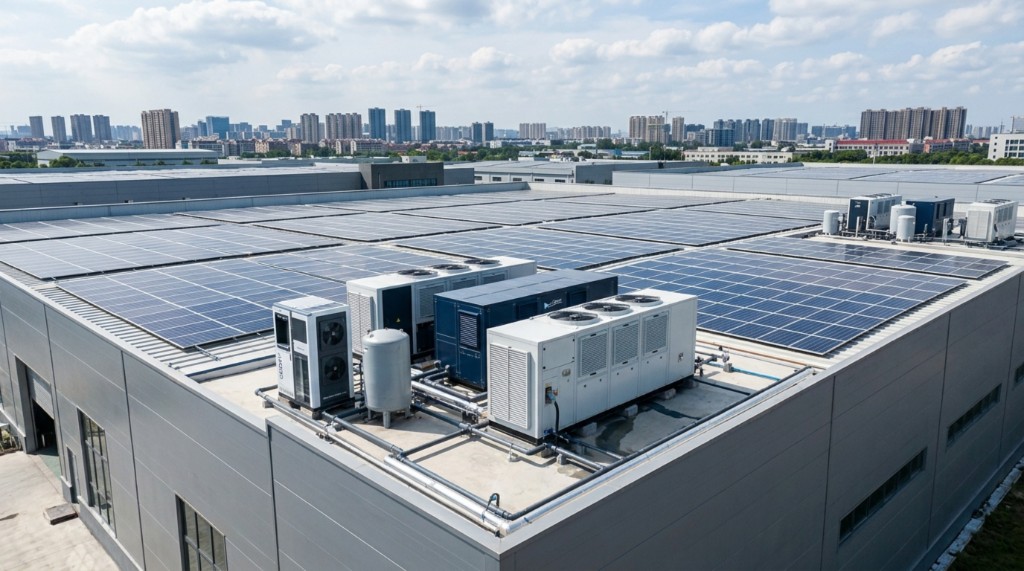
The technology has to process a certain amount of air and create conditions in which some of the moisture it contains can be separated.
In systems that use condensation, one approach is to cool the air below the dew point. The water vapour condenses and becomes liquid.
There are also other technologies for atmospheric water extraction, including those that use special sorbent materials.
But in all of them there is one basic principle:
The water is not created from nothing. It is already in the air.
The technology finds a way to extract it.
Why are temperature and humidity so important?
Imagine two days.
On the first the temperature is 15°C and humidity is 60%.
One cubic metre of air contains about 7.7 g of water.
On the second day it is 30°C at the same 60% humidity.
Now the same cubic metre contains about 18.2 g of water.
More than twice as much.
That is why the relative-humidity percentage alone is not enough when we talk about producing water from air.
We also need to know the temperature.
Scientific research on atmospheric water generation confirms exactly this – temperature and humidity are among the main factors that determine system output and energy requirements.
So a serious manufacturer should not simply promise:
“This machine produces X litres a day.”
The right question is:
“X litres at what temperature and what relative humidity?”
How much air has to pass through a machine to get water?
Here we can do another simple calculation.
At 30°C and 60% relative humidity one cubic metre of air contains about 18.2 grams of water vapour.
In theory, in:
1,000 m³ of air
there are about:
18.2 litres of water in the form of water vapour.
That does not mean, however, that a real machine will produce 18.2 litres from those 1,000 m³.
Not all of the moisture can or should be extracted. Actual yield depends on system design, airflow, temperature, humidity, dew point, heat-exchange efficiency and the way the unit operates.
That is why atmospheric water machines process large and constantly renewing volumes of air, rather than simply “drying out” the air in one room.
In fact nature does this all the time
Water from air can sound futuristic.
The physical process itself, however, is one of the oldest on Earth.
Water evaporates from oceans, rivers, soil and plants.
It enters the atmosphere.
It is carried over huge distances.
It cools.
It condenses.
It forms clouds.
It returns as rain, snow or dew.
That is the natural water cycle.
Humanity has not discovered a new kind of water.
It has discovered a way to use a different stage of the cycle.
From humidity to a water source
For millennia the way we use water has followed the same logic.
We find a water source.
We build infrastructure.
We transport the water to the place where we need it.
Wells. Aqueducts. Pipelines. Cisterns. Bottled water.
Atmospheric generation offers a different approach:
instead of transporting finished water, we use the water that is already present in the air on site.
That does not mean atmospheric water will replace pipes, reservoirs or all traditional water sources.
It means another technological option is added to them.
And in 2026 atmospheric water extraction is already an active field of scientific research, including condensation, sorption and hybrid technologies.

Next time you see droplets on a cold glass...
...look at them differently.
They are a small demonstration of something that is happening all around us.
Air is not empty space.
There is water in it.
Its amount changes constantly with temperature, humidity, place and season.
But it is there.
And if we can measure it, extract it and treat it in a controlled way, the logical next question is no longer:
“Is it possible to get water from the air?”
But:
“Where does it make sense to start using the air as an additional water source?”
That is exactly the principle on which Cup of Air atmospheric water generation systems work – they use the moisture already present in the air, extract it and then treat and filter it.
Sometimes a new technology becomes much easier to understand when we realise that nature has used the same principle for billions of years.
Want advice on the right model?
Request a quote